
 Clear scope. Clean execution.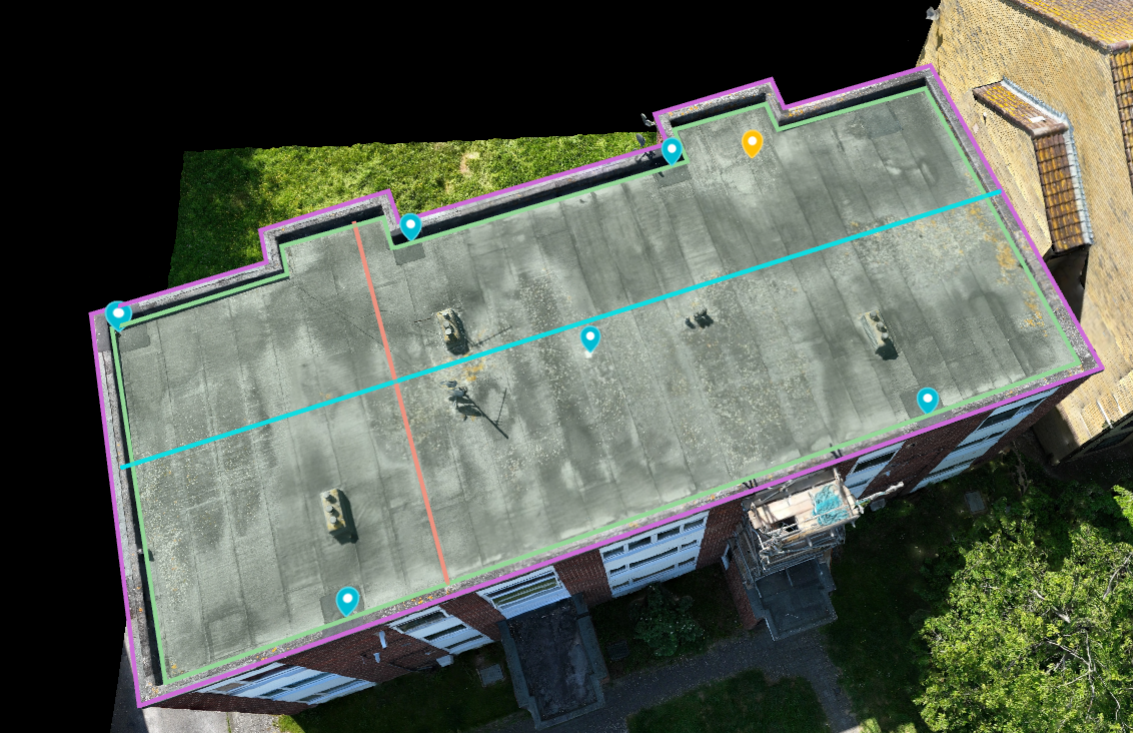
Condition reporting is the documentation layer between a roof inspection and a capital or business decision. The inspection produces observations. The condition report translates those observations into a structured, written record that an owner, lender, investor, or attorney can read and act on without a roofing background.
Most roof contractors produce inspection reports that are designed to generate repair proposals - a deficiency list with associated prices. Those reports serve the contractor's sales process. Our condition reports serve the building owner's decision-making process. The scope description tells the owner what fixing a deficiency requires; it does not quote a price. The severity rating tells the owner how urgently the deficiency needs to be addressed. The overall condition rating gives the owner a single number they can track over time and compare across buildings in their portfolio.
At Commercial Roofers of San Antonio, condition reports are produced at three depth tiers, matched to the owner's purpose. A transaction due diligence report has different requirements than an annual maintenance record, which has different requirements than a forensic failure analysis for insurance or litigation support. Knowing which tier a situation requires is part of the service.
The Three Report Depth Tiers
Tier 1 - Walk Assessment Report: A rapid condition assessment for owners who need a current snapshot without a full forensic investigation. The Tier 1 report covers the full roof surface, identifies the active deficiency areas, assigns an overall condition rating, and produces a prioritized deficiency list with severity ratings. Typical deliverable: 8 to 15 pages with a zone diagram, summary rating, and photo documentation of key deficiencies. Appropriate for: annual maintenance records, routine capital planning inputs, quick-turn transaction support when the roof is in obviously good or obviously poor condition.
Tier 2 - Full Condition Assessment Report: A comprehensive written condition assessment with zone-by-zone documentation, full photo set organized by zone and deficiency type, severity ratings for each deficiency, scope descriptions for each recommended repair, and a five-year capital projection. Typical deliverable: 25 to 50 pages depending on building footprint and condition complexity. Appropriate for: refinancing support, acquisition due diligence, warranty claim documentation, insurance claims, and capital planning for boards or investment committees.
Tier 3 - Forensic Condition Report: A detailed forensic investigation for situations where the cause of a failure needs to be established - insurance claims disputes, contractor workmanship questions, moisture intrusion source analysis, or litigation support. The Tier 3 report includes core sampling, laboratory moisture analysis if warranted, manufacturer specification comparison, and a written opinion on the cause and extent of the failure. Typical deliverable: 40 to 80 pages with full forensic documentation. Appropriate for: insurance disputes, contractor claim defense, legal proceedings.
What Makes a San Antonio Condition Report Useful
The usefulness of a condition report is a function of its specificity. A report that says 'flashings show wear consistent with age' tells the building owner nothing they can act on. A report that says 'Zone 4B - north parapet counterflashing, 47 linear feet, has separation at the top reglet averaging 3/8 inch width, allowing water entry during driven rain events from the northwest - the dominant storm approach direction for San Antonio Hill Country fronts' tells the owner exactly what they have and what fixing it requires.
San Antonio's commercial roof inventory has specific characteristics that a useful condition report documents: the presence or absence of Uri 2021 freeze damage on pre-2021 installations, the ponding patterns specific to the building's low-slope geometry and limestone-influenced drainage, the condition of the roof's drainage infrastructure relative to the summer storm season runoff loads, and the current warranty status relative to the maintenance record.
Report readability matters as much as technical completeness. Our reports are written for the decision-maker who will use them - which is often not a roofing professional. Technical details are included and documented, but the executive summary and the deficiency table are written so an owner, lender, or investor can extract the key facts without reading the full technical narrative.
Specific Use Cases for Written Reports in San Antonio
Acquisition due diligence: A buyer acquiring commercial property in San Antonio - a warehouse on IH-35 South, a retail strip in Leon Valley, a medical office building near the South Texas Medical Center - needs a roof condition assessment before close. The report needs to be completed within the due diligence window, which is typically 15 to 30 days. Our Tier 2 report is formatted to support acquisition due diligence, and we can expedite turnaround when transaction timelines require it.
Lender underwriting support: Commercial lenders in San Antonio require roof condition documentation for properties with roofs over a defined age threshold - typically 10 to 15 years depending on the lender. The report needs to include a remaining useful life estimate and a projected replacement cost. Our Tier 2 report includes both.
Insurance claim support: Hail events, named storm damage, and flash flooding - all of which occur regularly in San Antonio - generate insurance claims that require damage documentation. The condition report documents the extent and character of the damage before repairs are made, provides the basis for the repair or replacement scope, and supports the claim value. Our Tier 3 report is appropriate when the insurer disputes the claim scope.
Frequently asked questions
How quickly can you produce a condition report for a San Antonio commercial building?
A Tier 1 report for a building under 50,000 sq ft can typically be delivered within five business days of the inspection. A Tier 2 report for a complex building - multi-zone, multi-system, dense rooftop equipment - runs seven to ten business days. Tier 3 forensic reports require additional time for laboratory analysis and expert review - typically three to four weeks from inspection to final delivery. When a transaction timeline requires faster turnaround, we discuss what is feasible before scheduling the inspection.
Does the report include a repair proposal?
No. The condition report is a separate deliverable from a repair proposal. The report describes what the deficiencies are and what fixing them requires - scope and materials - without quoting a price. This separation is intentional: the report's value as an objective assessment would be compromised if it was structured around a repair proposal. After the report is delivered, the owner can request a separate repair proposal from us or take the scope descriptions to other contractors for competitive bids.
Is the report signed and can it be used in a transaction or legal proceeding?
Our condition reports are signed by the project manager who performed the assessment and include their credentials, inspection date, and the scope of the assessment. The report can be used in transaction due diligence, lender underwriting, insurance claim submission, and - for Tier 3 forensic reports - legal proceedings. If a legal proceeding requires the inspector to provide testimony, that is a separate engagement that we discuss before the report is commissioned.
Commission a written roof condition report for your San Antonio building.
We will walk the roof, document the condition at the appropriate depth tier for your situation, and deliver a written report you can use for capital planning, transaction support, or insurance documentation.
Request a Roof Scope