
 Clear scope. Clean execution.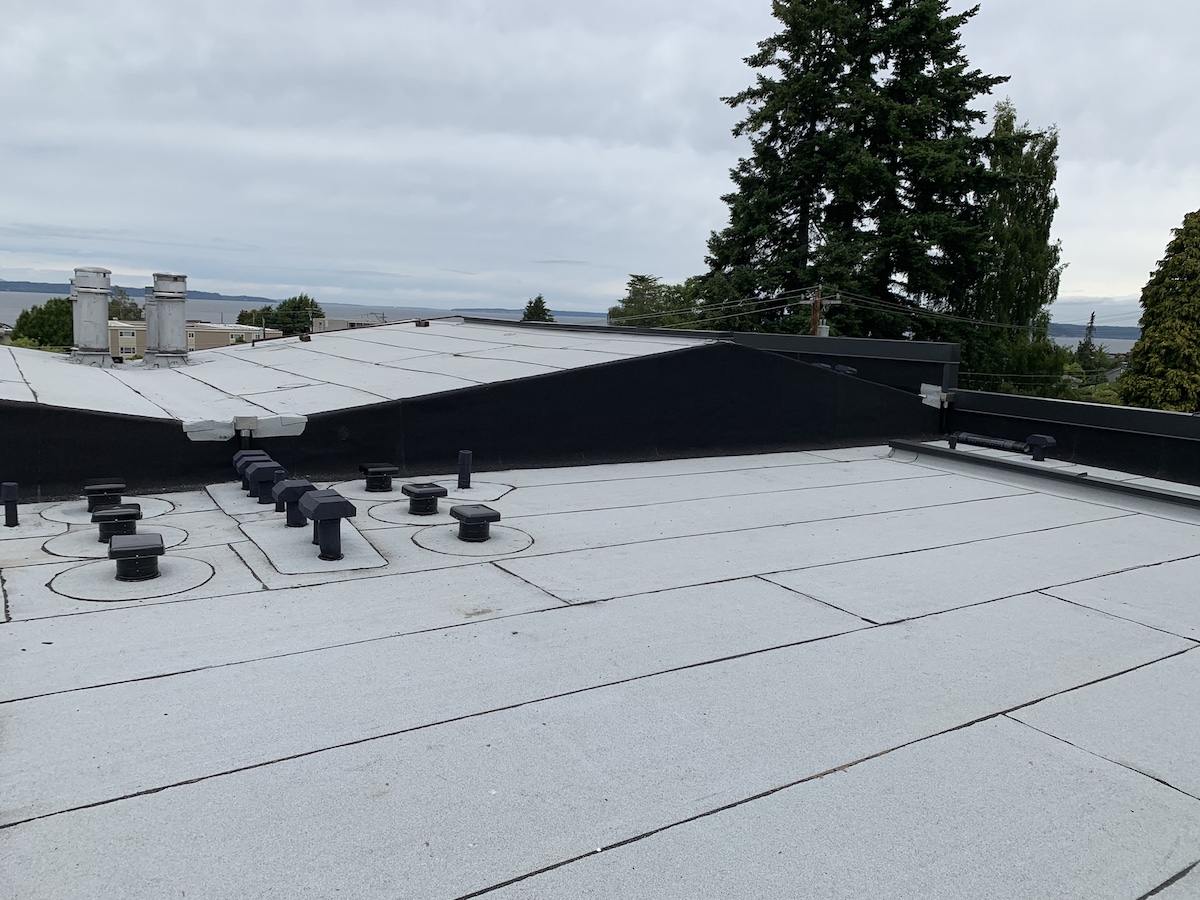
Modified bitumen roofing - SBS-modified and APP-modified asphalt in roll form - became the standard replacement for built-up roofing systems on San Antonio commercial buildings from roughly the late 1980s through the early 2000s. Downtown office and retail buildings that originally had coal-tar BUR often got their first reroof as a modified bitumen recover. The Riverwalk hotel corridor, the older commercial buildings along Commerce and Houston Streets, and the low-rise retail stock along San Pedro Avenue are dense with second- and third-generation mod-bit.
Commercial Roofers of San Antonio scopes modified bitumen systems for the buildings where mod-bit is still the right answer - and we say directly when it is not. There are downtown San Antonio buildings where the structural load capacity, the existing BUR substrate, and the project budget make a mod-bit recover the most defensible capital decision. There are others where the existing system has failed deeply enough that a single-ply tear-off and replacement is the right scope even if the initial cost is higher. We make that determination with moisture core data, not with assumptions.
Torch-Down vs. Self-Adhered Modified Bitumen
Torch-down (APP-modified bitumen) is applied by heating the underside of the roll with a propane torch until the bitumen flows and bonds to the substrate. It is the faster installation method and produces a more immediate bond, but torch application requires a hot-work permit from the City of San Antonio and fire watch for the duration of installation. On occupied buildings - hotels, hospitals, multi-tenant office - the hot-work permit process requires tenant notification and, on
Self-adhered (SBS-modified bitumen) uses a factory-applied adhesive backing that bonds to the substrate when the release liner is stripped. No open flame. This is the standard specification for occupied buildings in downtown San Antonio where torch application would require evacuating tenants or shutting down fire alarm systems. Self-adhered systems install slightly slower than torch-down, and the bond quality depends more on surface prep and ambient temperature - above 40°F is required for reliable adhesion, which is rarely an issue in San Antonio except during occasional winter cold fronts.
Hybrid systems - self-adhered base sheet with torch-applied cap sheet - are common on downtown San Antonio buildings where the contractor wants the no-flame advantage at the base sheet level but prefers the torch-applied finish quality on the exposed cap sheet. The cap sheet's granulated surface is the UV-exposed layer, and torch application produces a tighter bond for the cap that reduces the risk of delamination over time.
Recover vs. Tear-Off on Aging Mod-Bit Systems
Recover is the right path when the existing modified bitumen system has dry insulation confirmed by cores, when the deck is sound, and when the existing membrane surface is clean, flat, and adhered - no blisters, no open laps, no significant splitting. A recover over a clean mod-bit base adds a new waterproofing layer without the tear-off cost and landfill disposal fee. The economic case is strongest on buildings with large roof areas where tear-off disposal cost is significant.
Tear-off is required when moisture cores show insulation saturation above 25%, when the existing system has multiple generations of patches that create an uneven substrate, when the deck shows corrosion or deflection, or when the building needs to add insulation to Adding R-value through a recover is possible up to a point, but the profile height constraints on some downtown buildings - where the roof edge flashing height limits the maximum assembly thickness - can make full tear-off the only way to achieve code-required insulation depth.
The recover-versus-replace decision on many downtown San Antonio buildings is complicated by the layered history of the roof system. We have inspected buildings that have three or four generations of roofing stacked above the original deck - coal-tar BUR, then gravel-surface mod-bit recover, then smooth-surface mod-bit recover, then a coating. Each layer adds weight. Metal decks on older downtown buildings have defined load limits, and exceeding those limits with additional recover layers is a structural issue, not just a roofing issue.
Modified Bitumen Performance in San Antonio's Climate
SBS-modified bitumen performs well in San Antonio's freeze-thaw cycling because the rubber modifier keeps the membrane flexible at low temperatures. APP-modified bitumen is less flexible at the low end - APP cap sheets have been found with cold-weather cracking on San Antonio buildings inspected after the February 2021 Uri freeze, particularly at parapet flashings and area dividers where the membrane was constrained and could not relieve thermal stress.
Both formulations are available in granulated (UV-resistant) and smooth (for recover use or coating application) cap sheets. Granulated cap sheets are the standard exposed surface on finished mod-bit systems. The granules provide UV protection and are the primary indicator of remaining service life - when the granules are fully depleted and the bitumen surface is exposed, the membrane is near the end of its effective life.
San Antonio's sustained summer heat accelerates bitumen oxidation faster than in cooler climates. A mod-bit system that would carry 20 years in a mild climate may show brittleness and granule loss at 15 years in San Antonio. We account for this in our service-life estimates and in our recover-versus-replace recommendations.
Frequently asked questions
Does the City of San Antonio require a hot-work permit for torch-down roofing?
Yes. Torch-applied modified bitumen requires a City of San Antonio hot-work permit and a designated fire watch during application. We handle the permit application and coordinate the fire watch as part of our project setup. On occupied buildings in the downtown core or the Medical Center, we notify building management before torch work begins and verify that the building's fire alarm system will not be triggered by the work.
How long does modified bitumen last on a San Antonio commercial building?
Well-installed two-ply mod-bit systems - SBS base sheet and granulated cap sheet - run 15 to 20 years in San Antonio's climate with proper maintenance. The cap sheet granule condition is the primary service-life indicator. We photograph the granule condition during inspection and provide a written service-life estimate. Buildings that had their mod-bit installed in the early 2000s are now in the 15-to-20-year window where replacement planning should begin.
Can modified bitumen be coated instead of replaced?
A fluid-applied silicone or acrylic coating can extend the service life of a mod-bit system that still has structural integrity - no active splitting, no significant delamination, insulation dry on moisture core. Coatings add reflectivity, reduce thermal load, and can carry a 10 to 15 year manufacturer warranty. If the mod-bit surface has reached the point of active structural failure - open splits, saturated insulation - coating is not the right scope. We assess the coating candidate status as part of every mod-bit inspection.
Aging modified bitumen roof on a San Antonio building?
Our project managers will pull moisture cores, assess the recover vs. tear-off decision, and produce a written scope with installed-cost estimate and capital-planning timeline.
Request a Roof Scope