
 Clear scope. Clean execution.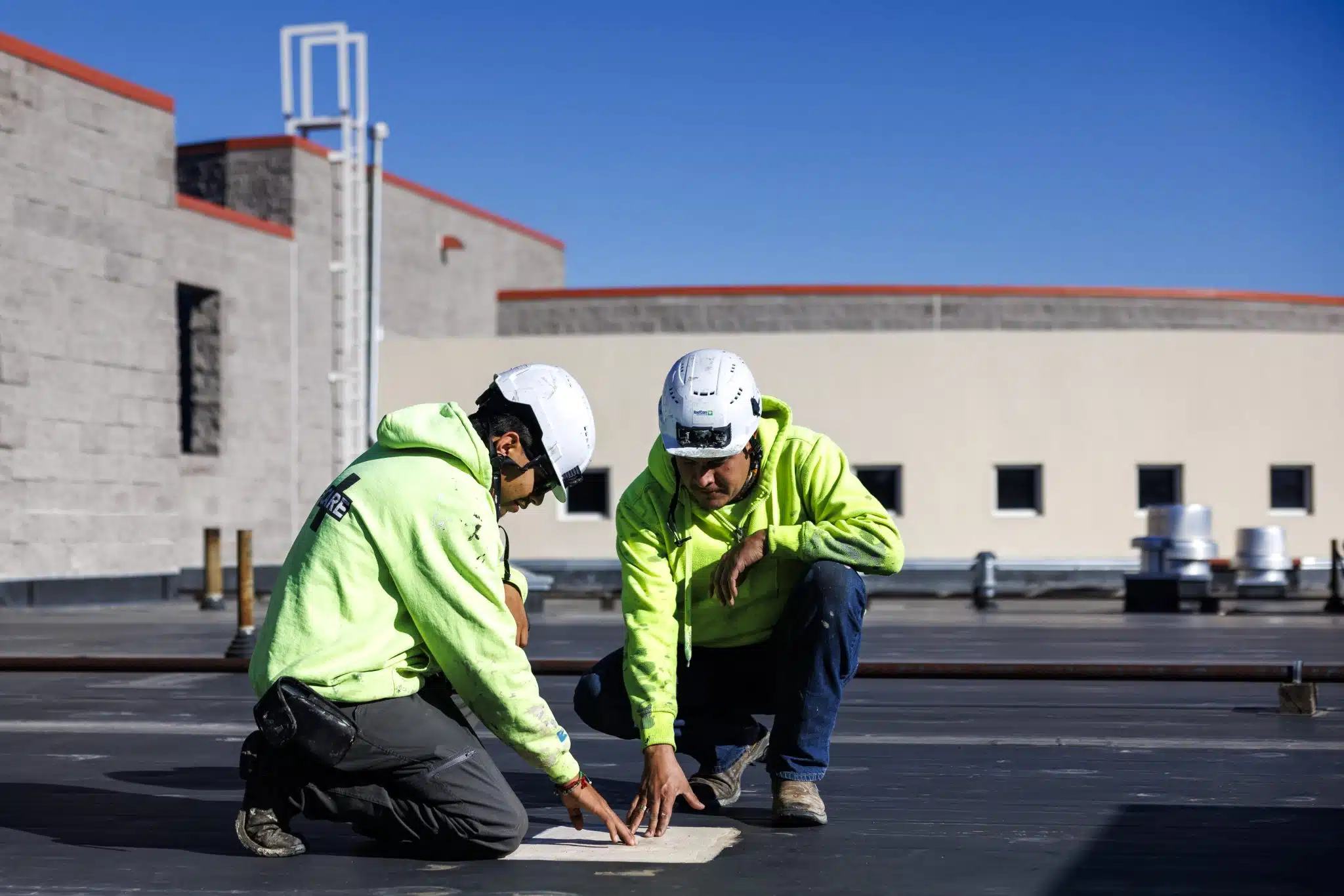
A 20-year manufacturer warranty on a new TPO or EPDM roof is not automatic. Every major manufacturer's warranty requires documented annual inspections and maintenance - and most commercial building owners either do not know this or let the documentation lapse within a few years of installation. When a roof failure occurs at year 12 of a 20-year warranty, the manufacturer inspects the maintenance record before paying a warranty claim. If the record is blank, the claim is denied.
We run maintenance contracts structured to the manufacturer's documentation requirement - not a generic annual walk with a handwritten note. Each inspection produces a written report with photo-keyed findings, a deficiency list with priority ranking, and a record of any maintenance work performed during the inspection. That record is the owner's evidence that the warranty has been maintained. We also build the inspection cadence around San Antonio's specific weather calendar: the storm season runs July through October, and post-storm inspection within 30 days of any significant weather event is a condition of most manufacturer warranties.
What a Warranty-Aligned Maintenance Contract Covers
Semi-annual inspections are the baseline for most manufacturer warranty requirements - spring (April or May) and fall (October or November). The spring inspection documents winter and freeze damage, clears drains of cottonwood and live oak debris accumulated over the winter, and checks flashing conditions before the summer heat season begins. The October inspection documents any summer UV degradation, checks seam welds that were stressed by July and August surface temperatures, and prepares the roof for the winter freeze season.
Post-storm inspections are a contract add-on we recommend for all San Antonio commercial properties. When a named tropical system or significant hail event affects the metro, we perform a supplemental roof walk within 30 days. For buildings near the Alamodome, the AT&T Center, and the downtown hotel corridor - where a roof failure during a major event is a revenue emergency - post-storm response is built into the contract as a standard provision.
Minor maintenance performed during the inspection is documented and included in the base contract cost up to a specified annual allowance - typically one to two hours of labor per inspection. This covers drain clearing, minor sealant touch-up at pipe boots, and re-taping of minor flashing lifts. Anything beyond the allowance is quoted separately before work is executed.
July Through October Inspection Cadence - Hurricane Remnant Season
San Antonio does not receive direct hurricane landfalls, but the metro is squarely in the path of weakening Gulf systems that produce multi-day rainfall events from July through October. The September 2018 remnants of Hurricane Rosa, the 2017 Harvey rainfall - which produced significant rooftop ponding in Bexar County even without wind damage - and the annual parade of weaker Gulf systems all stress San Antonio commercial roofs in ways that a standard bi-annual maintenance schedule does not account for.
Our maintenance contracts for San Antonio commercial buildings include a July hurricane-readiness inspection - drain clearing, flashing verification, and identification of any conditions that would produce interior damage if the roof received sustained heavy rainfall - and a post-major-event inspection for any system tracked by NWS San Antonio within 100 miles of the city. This cadence keeps the roof ready for the season's worst-case event and documents the pre-storm condition for insurance purposes.
The October inspection closes out the storm season and transitions the roof into winter preparedness. San Antonio averages fewer than five hard freeze events per year, but those events - exemplified by February 2021's Uri, which held below freezing for nearly a week - can produce damage that goes undetected until the next rainfall. We check pipe boots, parapet through-wall flashings, and coping caps specifically for freeze-related cracking during the October inspection.
Capital Planning Reports for Multi-Building Portfolios
Property management companies running multiple San Antonio commercial assets - the REIT-owned industrial parks along the IH-35 South corridor, the medical office building portfolios near the Methodist and Baptist Health System campuses, the retail strip centers across the Loop 410 ring - need a capital planning horizon, not just individual repair invoices. We produce a five-year capital forecast for each building in a managed portfolio: remaining useful life estimate, expected cost of repair versus replacement, and the maintenance spend required to keep each roof at its current condition rating.
The capital report is updated annually from the inspection findings. When a roof's condition rating changes - a previously dry insulation section develops saturation, a parapet flashing begins separating at the base - the capital estimate updates to reflect the change. Over three to five years, the capital report becomes a reliable planning tool for the building owner's budget cycle.
We have maintained these records for commercial building operators with portfolios ranging from three buildings to twenty-plus buildings across Bexar County. The inspection frequency, report format, and capital forecast model are all adjustable to the owner's reporting requirements.
Frequently asked questions
How often does my manufacturer warranty require maintenance inspections?
Most major manufacturer warranties - GAF, Carlisle, Johns Manville, Sika Sarnafil - require a minimum of one documented inspection per year for NDL (no-dollar-limit) warranties and two per year for some enhanced warranty tiers. We pull the actual warranty document for your building at contract setup to confirm the specific requirement. The warranty language is what controls, not a general answer.
What happens if I have not been maintaining my roof and the warranty has lapsed?
Most manufacturer warranties have a cure process for lapsed maintenance documentation - you cannot retroactively create maintenance records, but you can demonstrate current condition and recommit to a documented maintenance program going forward. Some manufacturers will re-certify a lapsed warranty after a paid inspection by their field representative and the building's roofing contractor. We have navigated this process for San Antonio building owners who acquired properties with undocumented maintenance histories.
Do you service roofs you did not install?
Yes. Most of the maintenance contracts we hold are for roofs installed by other contractors. We document the existing manufacturer, product, and installation date at contract startup, pull any available warranty documentation, and build the maintenance schedule to the applicable manufacturer standard. If the roof has no available documentation, we treat it as uninspected and produce a baseline condition report before the maintenance contract begins.
Can you handle multiple buildings across Bexar County under one contract?
Yes. We run portfolio maintenance contracts for operators with multiple buildings across San Antonio and the surrounding metro. Pricing is structured per-building with a portfolio discount. Inspection scheduling is coordinated to minimize disruption - we can inspect multiple properties in the same zone on the same day. The capital planning report covers all buildings in the portfolio in a single document.
Protect your San Antonio roof warranty with a documented maintenance contract.
We structure the inspection cadence, produce the documentation, and keep your manufacturer warranty active - with a capital forecast that tells you what each roof will cost over the next five years.
Request a Roof Scope