
 Clear scope. Clean execution.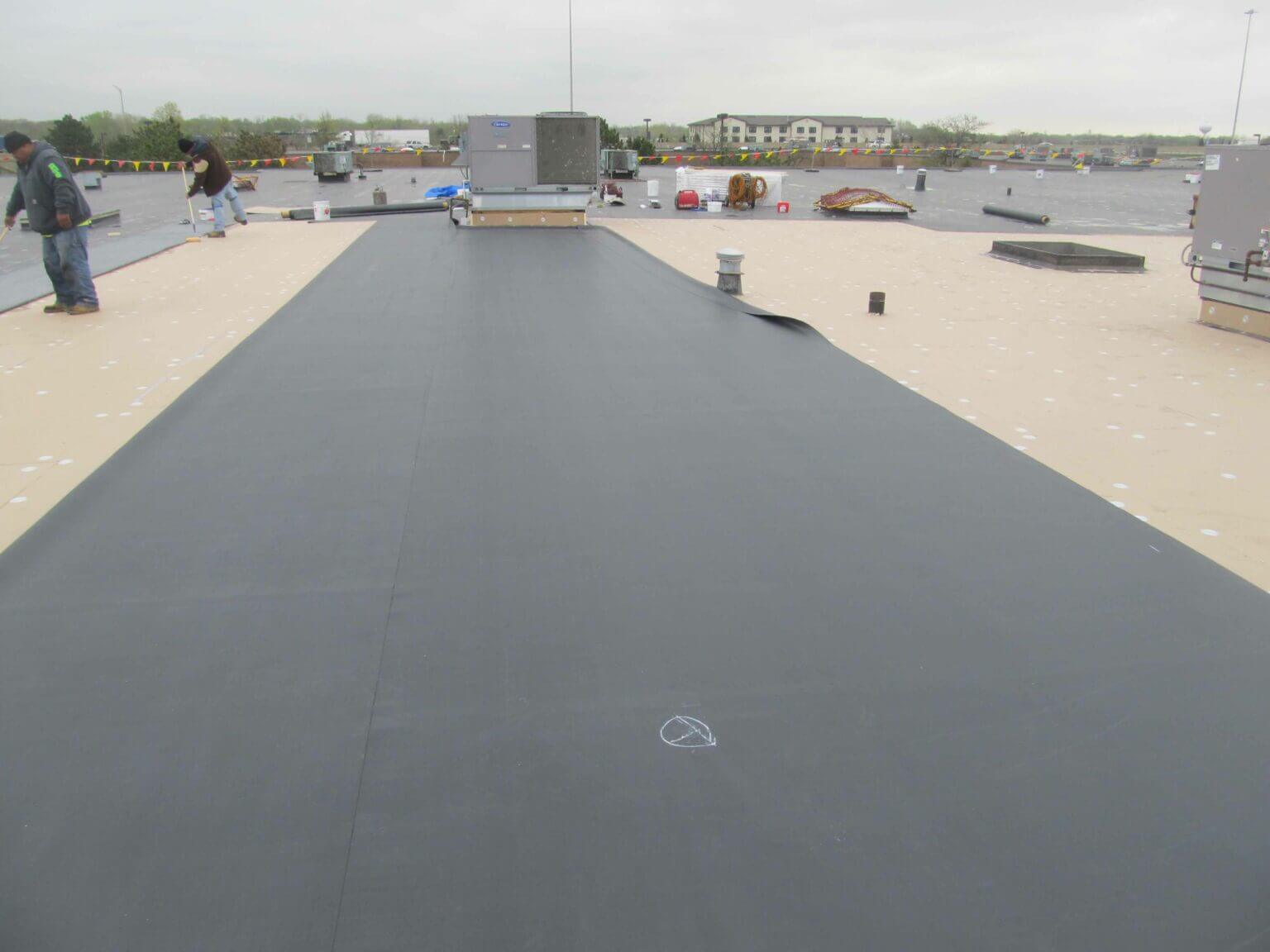
EPDM - ethylene propylene diene monomer - is the membrane with the longest commercial track record in the market. It was installed on San Antonio industrial buildings before TPO existed, and the 60-mil systems installed correctly in the 1990s are still performing on roofs in the IH-35 South industrial corridor today. That longevity comes from the rubber membrane's flexibility across the full temperature range San Antonio throws at it - from the 105°F summer peaks to the sub-20°F conditions the February older formulations of competing membranes did.
Commercial Roofers of San Antonio installs EPDM on industrial, manufacturing, and heavy-use commercial buildings across the metro. The IH-35 South corridor from Loop is the heaviest concentration of our EPDM work - large-footprint distribution centers and manufacturing facilities where rooftop traffic is frequent, where the building owner wants proven long-term performance, and where the dark membrane's heat absorption is managed with appropriate insulation depth rather than surface reflectance.
Ballasted, Mechanically Attached, and Fully Adhered EPDM
Ballasted EPDM is a loose-laid membrane held in place by river-washed stone at 10 to 12 lb per sq ft. It was common on San Antonio industrial buildings through the 1980s and 1990s and is the recover-in-place option when existing ballasted systems need membrane replacement. We rarely specify ballasted EPDM on new construction today - the dead load requirement rules it out on most metal deck systems, and the ballast makes drain access and future recover work more difficult. Existing ballasted systems we encounter get membrane replacement with the ballast cleaned, inspected, and reinstalled or replaced.
Mechanically attached EPDM is the production standard for new industrial work in San Antonio. The 60-mil membrane is fastened with plates and screws through insulation into metal deck on an uplift-engineered pattern. This is the right specification for the large-format distribution and manufacturing buildings along IH-35 South, where speed of installation and cost per square foot are primary concerns and the deck geometry is straightforward.
Fully adhered EPDM is used when the substrate is concrete, when the building is in a high-uplift zone requiring better-than-mechanical attachment performance, or when the project is a recover over an existing adhered system where re-penetrating the substrate would compromise the existing deck. Adhered EPDM is slower and more expensive to install but provides a tighter finished surface with less flutter and better performance in extreme wind events - a consideration on the exposed industrial facilities along Loop 410 and the open-terrain sites near the San Antonio International Airport.
EPDM on San Antonio Industrial Facilities - What We See in the Field
Seam failures at lap splices are the most common EPDM defect on aging systems. EPDM seams are bonded with adhesive and covered with seam tape - not heat-welded like TPO. Adhesive lap seams from pre-2005 EPDM systems have had 20-plus years of thermal cycling, UV exposure, and ozone degradation, and many are delaminating at the edges. Our EPDM inspection protocol includes probing every visible seam lap with a round-tipped probe. Failed seams get re-taped using current seam tape products, not patch tape.
Flashing shrinkage is an EPDM-specific failure mode. EPDM membrane has a low thermal expansion coefficient, but lap-adhesive flashings on parapets and penetrations can separate as the membrane moves. San Antonio's thermal cycling - from 100°F summer days to the occasional hard freeze - stresses these details over time. We inspect all flashings and re-adhere or replace any that show separation at the perimeter.
Ponding water on dark EPDM roofs is a double concern: it stresses seams the same way it stresses TPO seams, and it warms the building interior through heat transfer rather than reflecting solar radiation. We document ponding zones on every EPDM inspection and design tapered insulation packages on full replacement projects that eliminate standing water - which is required for warranty compliance on most manufacturer specifications.
Recover vs. Tear-Off on Aging EPDM Systems
Recovering an existing EPDM system with a new TPO or EPDM membrane is often the right economic decision when the insulation is dry and the deck is sound. TPO-over-EPDM recover is common on San Antonio buildings where the owner wants the reflectance benefit of TPO but does not want to pay for full tear-off. The recover assembly must stay within the manufacturer's permissible profile limits and the building's energy code requirements.
Full tear-off is required when moisture cores show insulation saturation above 25% of the surveyed area, when the deck shows corrosion or deflection, or when the building's energy code compliance requires a full insulation replacement. We pull moisture cores in representative locations before recommending either path. The written scope documents the core results and the decision basis so the building owner understands exactly why we recommended what we recommended.
Frequently asked questions
Is EPDM a good choice for San Antonio's heat?
EPDM's black surface absorbs heat, which increases HVAC load compared to a white reflective membrane. For buildings where energy cost is a primary concern, white TPO or a cool-roof coating is the better recommendation. For heavy industrial facilities where the membrane needs to outlast decades of mechanical traffic and where heat absorption is managed through insulation depth, EPDM's long-proven track record often makes it the right call. We will say directly which one fits your building.
How long does 60-mil EPDM last on a San Antonio industrial building?
Properly installed and maintained 60-mil EPDM systems from major manufacturers regularly run 25 to 30 years in Climate Zone 2. The critical maintenance items are seam inspection every two to three years, flashing re-adhesion as needed, and drain clearing twice annually. EPDM that is never maintained fails at the seams in 10 to 15 years; EPDM on a documented maintenance program regularly exceeds 30 years.
Can EPDM handle the San Antonio freeze events?
Yes. This is one of EPDM's genuine advantages over early TPO formulations. 60-mil EPDM remains flexible and tear-resistant at temperatures well below 0°F. The February 2021 Uri freeze caused virtually no membrane failures on EPDM roofs in San Antonio - the damage was concentrated in flashing details and adhered lap seams that had dried adhesive, not in the membrane itself.
EPDM scope for a San Antonio industrial building?
Our project managers will inspect the roof, pull moisture cores if the recover decision hinges on insulation condition, and produce a written scope with manufacturer warranty path and installed-cost estimate.
Request a Roof Scope