
 Clear scope. Clean execution.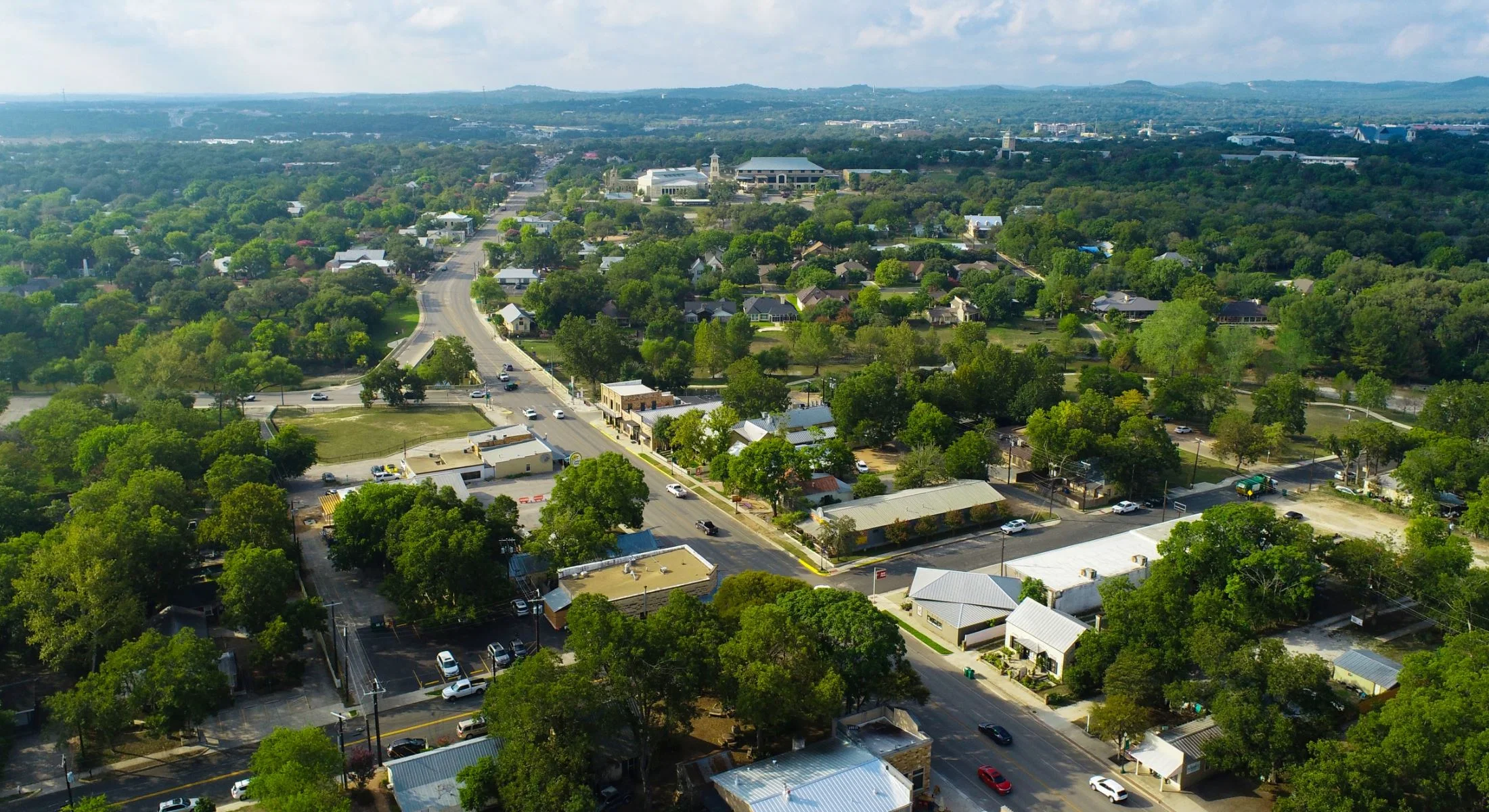
Boerne straddles two commercial worlds. The historic downtown along Main Street and Herff Road carries 19th-century German settler commercial masonry - storefronts, the Boerne Town Creek historic district, the Cibolo Nature Center campus - that requires a different approach than the newer commercial inventory. The IH-10 frontage east and west of the IH-10 / SH-46 interchange has built out with chain retail, hospitality, and the light-industrial parks that serve the northwest San Antonio growth corridor. The two inventories call for different scoping instincts.
Boerne sits squarely on the Edwards Plateau - the karst limestone formation that underlies the Hill Country. That geology affects every aspect of commercial construction in Boerne: foundation behavior, rooftop equipment anchoring, and the way structural movement shows up in parapet flashings and seam details over time. We scope Boerne work with the limestone karst context in mind, because the failure modes here are different from the Blackland Prairie clay-movement failures we see in Schertz and Cibolo.
We pull City of Boerne permits and Kendall County permits for ETJ properties. Our San Antonio office is 30 to 35 minutes from the Boerne commercial core via IH-10. Emergency dry-in calls are same-day. We have scoped and executed work on Boerne commercial buildings ranging from the IH-.
Boerne Commercial Inventory by Zone
Historic Main Street and Town Creek District: Commercial masonry buildings along Main Street between Blanco Road and Rosillo Creek. Many are from the late 19th and early 20th century - limestone block and brick construction with low-slope or flat roof planes behind parapets. Roofing on these buildings is often a stack of legacy systems - built-up roof layers from multiple budget cycles, sometimes modified bitumen applied over BUR without full tear-off. We perform moisture-core analysis before recommending a recover or replace path because wet insulation is common in this stock.
IH-10 East Frontage (FM 289 / Cascade Caverns Road): The primary chain retail and hospitality zone. Big-box anchors, hotels, chain restaurants, and the Boerne Commons shopping center development. Most of this inventory was built between 2000 and 2018 and is running first or second-generation TPO. The open-terrain exposure along IH-10 gives these buildings higher wind loads than downtown Boerne. We see a consistent pattern of corner-zone membrane uplift on buildings that were fastened to a generic grid rather than an ASCE 7 uplift-calculated pattern.
Business Park Corridor (SH-46 East / Stonehaven Drive): Light-industrial and business-park buildings serving the northwest SA commercial corridor. Newer facilities from the 2010 to 2022 wave on metal deck with TPO or EPDM. These are in first-generation warranty maintenance cycles. The Boerne Champion ISD campuses - Champion High School on Johns Road, Boerne Middle School North - fall in this zone and represent the district's most recently constructed facilities.
Welfare Road and Old Fredericksburg Road: Older commercial and industrial buildings west of downtown, some dating to the 1970s and 1980s. Heterogeneous roofing inventory. Modified bitumen and BUR are common; some have been partially recovered with TPO. These buildings benefit most from a documented inspection with moisture-core data before the next budget cycle.
Hill Country Roofing Conditions in Boerne
Edwards Plateau karst substrate: Boerne sits on exposed limestone karst - the same formation that produces the caves and springs of the Hill Country. Karst settlement is not the dramatic sinkhole-collapse that the word suggests in commercial-building contexts; it is gradual differential settlement that shows up over decades as parapet racking, drain misalignment, and seam stress concentrations at areas where the building responds to localized subsidence. We look for these patterns during inspection and specify flexible flashings at stress concentration points.
Hill Country wind events: Boerne sits northwest of San Antonio in terrain that channels the southerly gap winds from the Balcones Fault. Wind events at Boerne commercial buildings are more sustained and more variable in direction than at downtown San Antonio buildings. The IH-10 corridor is exposed to open-terrain uplift. Our fastener pattern design uses Exposure C assumptions for IH-10 frontage buildings and Exposure B for downtown Boerne - the difference is meaningful for corner-zone fastener density.
Freeze exposure: Boerne is at 1,400 feet elevation and noticeably colder than San Antonio in winter. The February 2021 Uri freeze was severe here - sustained below-freezing temperatures for over a week produced ice dam conditions on low-slope roofs that had never been designed for ice loads. We inspect explicitly for Uri-related latent damage on all pre-2021 roofs in Boerne: cracked parapet cap flashings, split seam welds at low-slope sump areas, and brittle pitch-pocket filler around conduit and pipe penetrations.
Hill Country hail: Boerne sits in the path of Hill Country storm cells that produce the largest hail in the San Antonio metro area. The limestone terrain reflects and intensifies convective updrafts. We have documented hail damage on Boerne commercial roofs from events where downtown San Antonio received little damage. We specify HD polyiso cover boards and hail-resistant membrane on all new installations.
Frequently asked questions
How quickly can you respond to a roof emergency in Boerne?
Same-day mobilization for confirmed commercial emergencies in Boerne. Our San Antonio office is 30 to 35 minutes from the Boerne commercial core via IH-10 in normal traffic. The Hill Country storm cells that produce hail and wind events at Boerne move fast - we can mobilize before a confirmed event for buildings on our maintenance contracts when NWS Boerne-area watches are posted.
Do you pull City of Boerne building permits?
Yes. We pull City of Boerne permits for all replacement work and for repair work above the permit threshold. For properties in the ETJ - particularly the industrial parks on SH-46 East - we pull Kendall County permits. Boerne's Building Inspections division processes commercial roofing permits. We handle the application, required inspections, and permit closeout.
Can you work on the historic commercial buildings on Main Street in Boerne?
Yes. The Main Street and Town Creek historic district buildings require a careful approach to scope. The roof system itself on flat-roof commercial buildings is rarely subject to historic preservation review, but parapet coping, visible drainage elements, and any rooftop equipment visible from street level may be. We review with the City of Boerne's historic district requirements and the Texas Historical Commission for any National Register property before finalizing scope.
What roof systems do you install most in Boerne?
White TPO 60-mil for the IH-10 corridor commercial buildings. EPDM for older industrial buildings where recover economics favor a single-ply recover over existing modified bitumen or BUR. Modified bitumen torch-down on historic downtown buildings where the existing system is being extended rather than replaced. We specify 80-mil TPO for buildings with heavy rooftop mechanical traffic - hotels and facilities with large HVAC equipment require the additional puncture resistance.
Boerne commercial roof inspection or scope?
Our project managers will walk the roof, pull moisture cores if the recover-vs-replace decision depends on it, and produce a written scope detailed enough to put to bid.
Request a Roof Scope