
 Clear scope. Clean execution.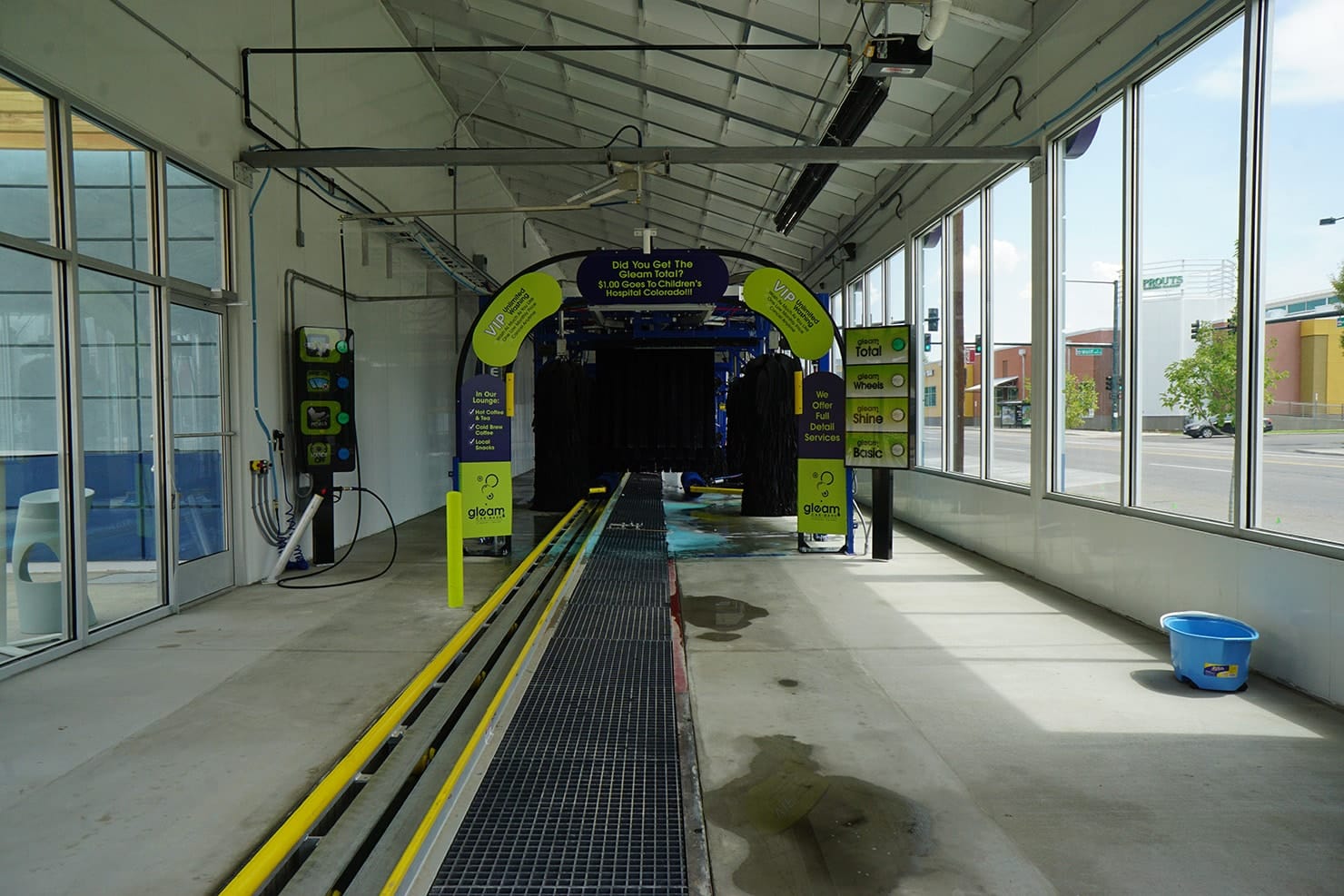
Roofing for San Antonio Car Washes That Run Wet All Day
A car wash roof fails from the inside out, and that is what makes it different from almost every other building we work on. The tunnel below is a permanent steam chamber. Hot water, presoak, foaming detergents, tire shine, and drying agents atomize during every cycle and rise straight into the deck cavity. That vapor carries chlorides and alkaline compounds that condense on the underside of the deck, attack fasteners, and corrode the very screws holding the roof system down. We have pulled fasteners out of car wash decks that snapped at the threads from rust the owner never saw because every symptom was hidden above the ceiling.
We build and maintain car wash roofs across the San Antonio market, from the express tunnels lining Bandera Road and Marbach on the West Side to the conveyor washes packed along the 281 and 1604 retail nodes in the north and the heavy cluster of operators around Loop . Quick Quack, Wash Tub, and a long list of independent operators have expanded fast here, and the buildings going up to serve them are lightweight steel-frame structures that were value-engineered for speed, not for a 30-year fight against interior humidity. That is the roof we are usually called to fix.
Why the Wash Environment Eats Standard Roof Systems
Most single-ply membranes are warranted against weather, sun, and foot traffic. None of those is the real threat on a wash. The threat is continuous condensation and chemical vapor working on the assembly from below, plus thermal shock every time a hot cycle meets a cold deck. Three things drive our specification on every San Antonio car wash:
- Vapor drive. The interior is hot and saturated nearly every operating hour. Without a properly placed vapor retarder, that moisture migrates into the insulation, wets it, drops its R-value to nothing, and starts rotting fasteners and corroding metal deck. We design the assembly so the dew point lands where the moisture cannot accumulate.
- Chemical attack on fasteners and deck. Detergent and reclaim-water chemistry is alkaline and chloride-heavy. We move to coated or stainless fasteners and stress-plates on the wash bay, because standard galvanized hardware corrodes far faster here than the manufacturer's exposure tables assume.
- Membrane chemistry. PVC holds up to alkaline detergent and wax residue better than TPO or EPDM over the long run, which is why we lean toward a reinforced PVC system over the active tunnel. The lobby, equipment room, and office areas are a different exposure and can take a more conventional system.
The Tunnel Is Not the Same Roof as the Rest of the Building
We scope a wash as several distinct roofs even when it looks like one slab. The tunnel itself is the punishing zone and gets the chemical-resistant membrane, the upgraded fasteners, and oversized exhaust curbs. The blower and dryer exhaust fans push enormous volumes of warm, wet air through the deck, and standard HVAC curb details do not survive that airflow. We flash each penetration as its own problem, sized to the equipment and the chemistry around it, rather than dropping in a stock boot.
The equipment and reclaim rooms carry their own humidity from pumps, water heaters, and chemical totes, so we treat those bays as wet zones too. Vacuum canopies and pay-station canopies on the exit side are a separate story altogether: they take vehicle exhaust, overspray, and full sun, and the canopy-to-building flashing and canopy drains are the single most common leak point we find on express sites in San Antonio.
Drainage and Ponding on Flat Wash Roofs
Express tunnels are long and narrow, and the roofs are nearly dead-flat. That geometry ponds water, and ponding plus chemical residue plus relentless South Texas sun ages a membrane years ahead of schedule. On reroofs we usually add tapered insulation to build positive slope to the drains and scuppers, so the roof sheds instead of holding standing water that bakes all afternoon. We confirm the drain layout matches the slope we are building rather than assuming the original design ever worked.
Working Without Closing the Wash
A San Antonio wash makes its money seven days a week, and the busiest stretch runs right through the hot, dusty summer when cars need it most. We sequence around that. Tunnel-roof work happens during the early-morning or after-close window when the conveyor is down, and we confirm same-day dry-in every day so the bay is watertight before the next open. Canopy and office-area work can run during business hours with the crew and lift staged clear of the entry and exit lanes so traffic keeps moving.
Common Questions From San Antonio Car Wash Owners
Why does my car wash roof leak when the rest of the building looks fine?
Because the damage is usually internal. Tunnel humidity wets the insulation and corrodes fasteners and deck from below, so the membrane on top can look intact while the assembly underneath is failing. By the time you see a ceiling stain, the fasteners holding the system down may already be compromised. That is why we core the assembly and check fastener pull-out rather than judging the roof by its surface.
What membrane do you put over the wash tunnel?
A reinforced PVC system, typically fully adhered or with coated fasteners and stress plates, because PVC resists the alkaline detergents and wax compounds in commercial wash chemistry better than TPO or EPDM over a full service life. The non-tunnel areas, the lobby, office, and equipment rooms, can take a more standard single-ply since they are not under the same vapor and chemical load.
Can you fix the vacuum canopies and the entry canopy too?
Yes. Canopy covers, the canopy-to-building flashing, and the canopy gutters and downspouts are all part of how we scope a wash. Those transitions leak more often than the main roof on express sites, so we evaluate them as their own line items rather than an afterthought.
Will the chemical exposure void my roof warranty?
It can. Most single-ply warranties carry exclusions for chemical exposure, so we confirm with the manufacturer up front that the wash chemistry at your specific site is compatible with the system we are specifying and that the warranty covers those conditions. Where it matters, we pursue a membrane and warranty path written for this environment instead of a generic commercial warranty.
How disruptive is a reroof to daily operations?
Less than most owners expect. We do the tunnel work in your closed window, dry it in the same day, and keep canopy and office work to hours and staging that do not block the lanes. The goal is to keep cars moving through the wash while we work above them.