
 Clear scope. Clean execution.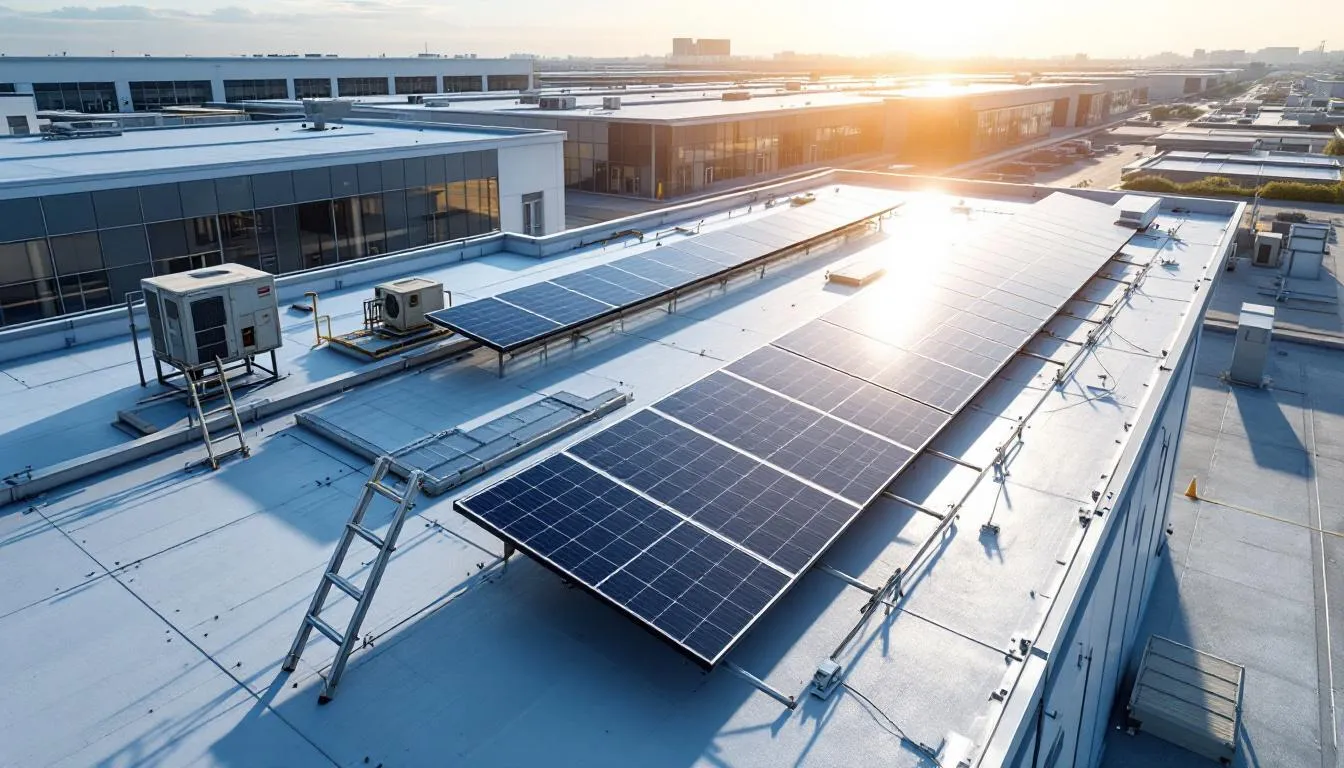
Industrial Flex Space Roofing in San Antonio, TX
A flex building is really several buildings wearing one roof. Under a single low-slope membrane you might find a contractor's shop in the front bays, a small distributor in the middle, and a startup running a prototype lab in the corner suite with its own dedicated cooling. We reroof these multi-tenant flex properties across San Antonio, and the work always begins the same way: not with a membrane choice, but with a count. Every rooftop unit, every plumbing stack, every abandoned conduit from a tenant who left three leases ago has to be found and recorded before anyone talks price.
The reason is simple. Flex roofs accumulate penetrations the way a busy desk accumulates paper. When a tenant moves in, their HVAC contractor sets a new curb. When they move out, the unit often comes off and the opening gets a temporary cap that nobody revisits. Multiply that across a dozen suites over twenty years and the field of a flex roof becomes a map of decisions made by people who are long gone. We photograph and locate each one, flag the orphaned and improperly sealed penetrations, and build the remediation into the scope so it never becomes a warranty argument after the crew leaves.
Where Flex Space Lives in San Antonio
San Antonio's flex inventory clusters in a few recognizable belts. The northwest stretch along Loop 1604 and the I-10 corridor toward the University of Texas at San Antonio main campus has filled in with newer tilt-wall flex parks serving cybersecurity firms, medical-device suppliers, and the contractors who support them. To the south, the Brooks campus on the old Brooks Air Force Base land has turned into a mixed innovation district where light-industrial flex sits next to research and education tenants. And the older Tri-County and Northeast corridors near Loop 410 and Perrin Beitel hold the 1980s and 1990s metal-frame and concrete flex stock that is now reaching its first or second full reroof.
That spread matters because the buildings are not the same age or the same construction. A 1604-corridor flex building built in the last fifteen years usually carries a structural steel deck designed with reroofing in mind. A Northeast-corridor building from the Reagan era might be a pre-engineered metal building with an R-panel roof that was never meant to take a second layer of anything. We do not bring one specification to both. We bring a core sample and a structural review.
What the Multi-Tenant Roof Actually Demands
The defining roofing reality of flex space is penetration density combined with split occupancy. A purpose-built warehouse for a single user has a clean roof with a handful of large units. A flex building of the same square footage might carry three times the penetrations, all at different heights, all flashed by different hands over different decades. Our standard field assembly for tilt-wall and concrete flex is a 60-mil mechanically attached TPO over new polyisocyanurate, which gives us a reflective surface for the long Texas cooling season and a fastening pattern we can tune to the deck. Where one tenant runs heavy rooftop traffic for frequent service calls, we step up to an 80-mil membrane or fully adhered PVC in that zone so the field survives the foot traffic.
Drainage is the second quiet problem. Flex roofs were often built dead-flat, and after years of insulation compression they pond at the low tenant lines. We design tapered insulation to move water to the drains and scuppers instead of letting it sit over the suite that happens to occupy the building's low corner. On pre-engineered metal flex buildings we evaluate a silicone-coated metal recover or a retrofit standing-seam system against full replacement, weighing panel condition, purlin spacing, and what the existing frame can legally carry.
Phasing Work Around Live Tenants
No two suites in a flex building keep the same hours or the same tolerance for disruption. A welding shop does not care about a little noise; a tenant running sensitive instruments in a back bay cares a great deal. Before we mobilize we get a bay-by-bay occupancy map and a contact list from property management, and we sequence tear-off suite by suite so that the loudest, dustiest work lands over the tenants who can absorb it and the gentlest sequencing protects the ones who cannot. Tenants hear about the schedule through the property manager, not from a crew member shouting down from the parapet.
Vacant bays get their own attention. An empty suite is where debris collects, where a former tenant's capped curb has quietly been leaking into dead space, and where a clogged drain goes unreported because no one is underneath to see the stain. We check curb caps, confirm old penetrations are sealed, and clear the drains in vacant areas as part of every flex inspection during a lease transition.
- Penetration survey first: every curb, stack, and conduit photographed and mapped before pricing.
- Field assembly: 60-mil mechanically attached TPO over polyiso, stepped up to 80-mil or adhered PVC in high-traffic tenant zones.
- Tapered drainage design to pull standing water off compressed dead-flat decks.
- Metal-building options: coated-metal recover or retrofit standing seam evaluated against tear-off on pre-engineered frames.
- Suite-by-suite phasing coordinated through property management, with same-day dry-in on every section.
Built for Investors and Property Managers
Most flex space in San Antonio is held by investors or managed in portfolios, so we price the way that audience buys: a fixed-price proposal per roof square after a walk and a core sample, with a condition report you can drop straight into a capital plan. When you own several flex buildings around the 1604 and 410 loops, you get a consistent report format across all of them, so comparing the roof on a Brooks-area building against one on the Northeast corridor is a matter of reading the same columns, not deciphering five different write-ups.
If you manage a multi-tenant flex property and you are seeing stains appear in one suite after every rain, or you have a lease transition coming up and need to know what the roof is worth before you sign, we will walk it, pull cores where the assembly is in question, and give you a written scope that says plainly whether this is a repair, a recover, or a replacement.