
 Clear scope. Clean execution.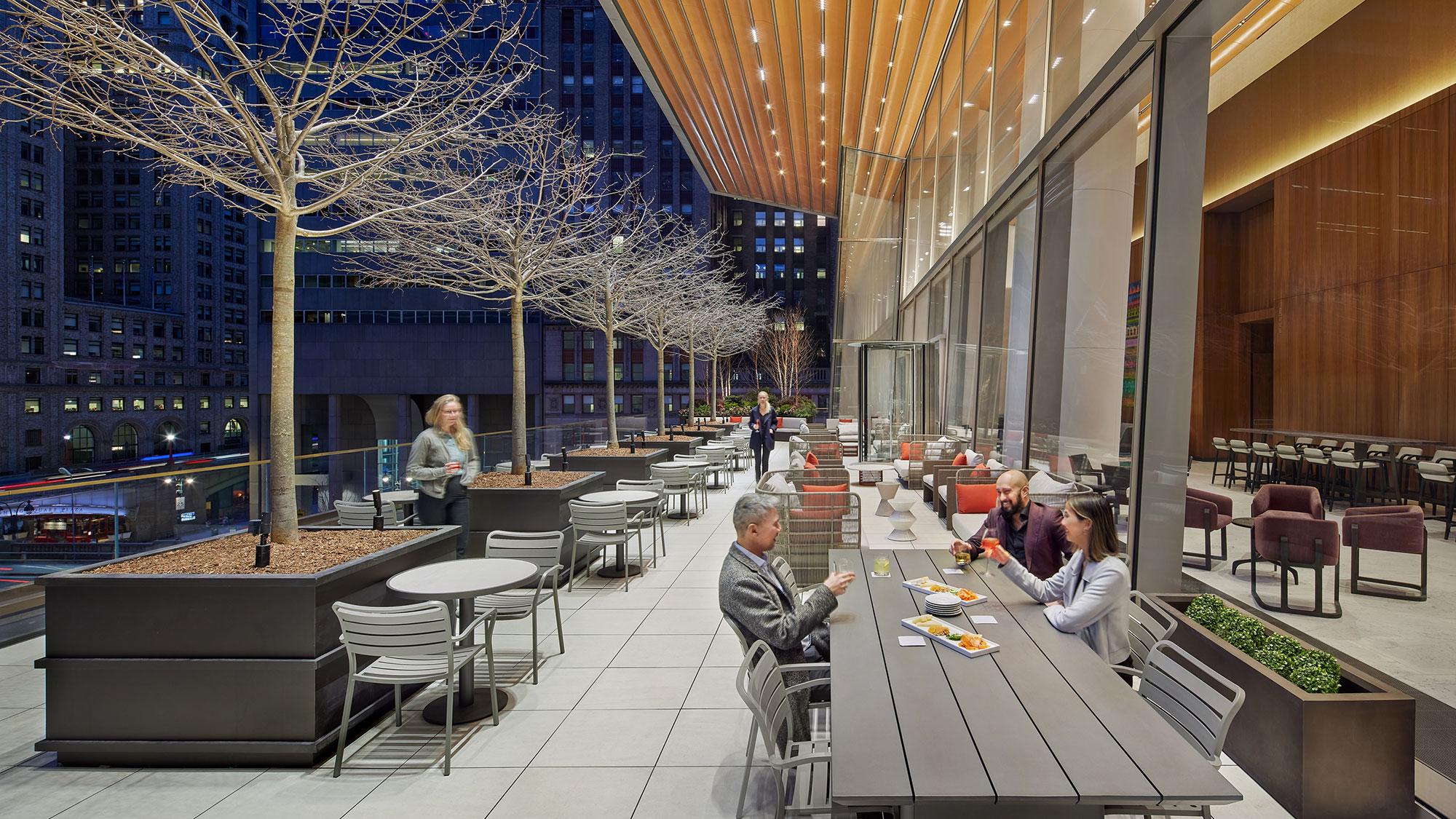
Mixed-Use Development Roofing in San Antonio, TX
A mixed-use building stacks lives on top of each other. Shops open to the sidewalk at grade, offices fill the middle floors, apartments occupy the top, and a parking structure threads through the base. The roof is not one plane on a building like this. It is a podium deck over the parking, a main roof over the residential floors, an amenity terrace where residents gather, and a string of smaller roofs over mechanical penthouses and stair overruns. Each of those surfaces answers to a different occupancy, a different load, and a different warranty, and a single drip in the wrong spot can land in a leased apartment or a tenant's storefront. We coordinate the whole vertical assembly rather than treating the building as a flat lid.
The most misunderstood part of these buildings is the podium. The deck that separates parking or retail below from occupied space above is not a roof in the ordinary sense, and it cannot take an ordinary roofing membrane. A podium has to carry pedestrian traffic, sometimes vehicle traffic, planters with their own hydrostatic pressure and root systems, and the structural deflection of a deck that flexes under live load. That calls for a traffic-bearing waterproofing assembly with drainage composite and root barrier, coordinated with the structural engineer's load path. Drop a standard low-slope membrane onto a plaza deck and it tends to fail within a few years, usually right under the most expensive landscaping.
Where Mixed-Use Is Rising in San Antonio
San Antonio's mixed-use story is centered on a few districts. The Pearl, built out from the old Pearl Brewery grounds along the northern reach of the River Walk, is the city's flagship example, layering restaurants, shops, offices, and residences with public plazas and rooftop terraces that all sit on waterproofed structural decks. Southtown and the Blue Star Arts Complex along South Alamo have drawn adaptive-reuse and ground-up mixed-use that combines galleries and retail with lofts above. And the downtown core and the East Side near the Hemisfair redevelopment continue to add residential-over-retail towers as the urban housing push fills in surface lots. Each of those settings brings parapet detailing, occupied-space access limits, and noise-ordinance hours that a suburban roof never has to think about.
Those districts also bring scrutiny. Pearl-area and downtown projects are watched closely, often sit on or near the River Walk's water table, and frequently involve historic-adjacent construction where the appearance of a parapet or a terrace edge is part of the deal. We plan the waterproofing knowing the building is being looked at from the street and from the units above, not just inspected from a ladder.
What Each Roof on the Stack Demands
The main roof over the residential floors is its own coordination job: parapet drainage that actually clears, mechanical-penthouse flash-throughs detailed for movement, and tight transitions where the roof meets elevator overruns and rooftop mechanical rooms. The amenity terrace, common on the mid-rise and high-rise projects in these districts, sits on a traffic-bearing waterproofing assembly underneath whatever finish the residents walk on, installed in lockstep with the deck-finish contractor and the structural engineer. We do not confuse a terrace with a roof, and we do not let the finish trade set pavers over a membrane that was never rated to be buried and walked on.
Warranty coordination is the thread that runs through all of it. A mixed-use building can carry several different roofing and waterproofing systems from more than one manufacturer, each with its own registration, inspection schedule, and no-dollar-limit terms. We map which system covers which area, line up the manufacturer rep inspections at the critical phases, and make sure every assembly is registered in the owner's name at closeout so a future claim on the podium does not collide with a separate warranty on the residential roof.
- Podium waterproofing: traffic-bearing membrane, drainage composite, and root barrier coordinated with structural load.
- Main residential roof: parapet drainage, penthouse flash-throughs, and tight overrun transitions.
- Amenity terraces built on a buried traffic-bearing assembly under the walking finish.
- Multi-system warranty mapping so each area's coverage and inspection schedule is tracked and registered to the owner.
- Mock-ups and QC inspections run inside the project's submittal framework with the GC, MEP, and envelope consultant.
The River and the Water Table
Much of San Antonio's mixed-use sits close to water, and that proximity is not a backdrop, it is a design constraint. Pearl-district and downtown projects rise near the River Walk extension and over a high water table, which means the waterproofing on a podium or a below-grade transition is fighting moisture from more than one direction. A leak that would simply drip in a suburban building can find a path through a structural deck and into a parking level or a leased ground-floor space, and the repair is far more invasive once finishes and pavers are over the failure. We treat the below-finish assemblies on a riverside building as the part of the project least tolerant of a shortcut, because they are the hardest to get back to.
The combined roof areas also complicate something as basic as drainage. A mixed-use building drains its main roof, its terraces, and its podium through a shared storm system, and water that ponds on an amenity deck because a single drain was set a half-inch high ends up sitting over occupied space. We coordinate the drainage across all the surfaces as one system during design, confirming that every deck sheds to a working drain, so the building does not solve a leak on one level by creating a pond on another.
Working Over Occupied Floors
Most mixed-use roofing in San Antonio's core happens over a live building. Residents are sleeping below, a coffee shop is serving at grade, and the city's noise ordinance governs when loud work can happen. We build a phasing plan before mobilizing that sequences work to spare occupied units and keep retail running, with dust and vibration containment and a notification chain that runs through building management to the affected tenants. Elevator and common-area access is mapped so the crew is not competing with residents for the freight car at move-in hours. And the discipline that protects everyone is simple and absolute: no section goes home for the night unless it is watertight, confirmed in writing before the crew leaves.
Developers and their lenders expect a paper trail, and we work inside it from preconstruction forward: architect-reviewed submittals, manufacturer technical approval of each specified system, mock-up testing before full installation, quality-control reports, manufacturer-rep inspections at the phases that matter, and warranty registration at closeout. If you are planning a Pearl-area or downtown mixed-use project, or you own one that is leaking at a podium planter or an amenity-deck edge, we will assess the full stack of surfaces and give you a written scope for each one.