
 Clear scope. Clean execution.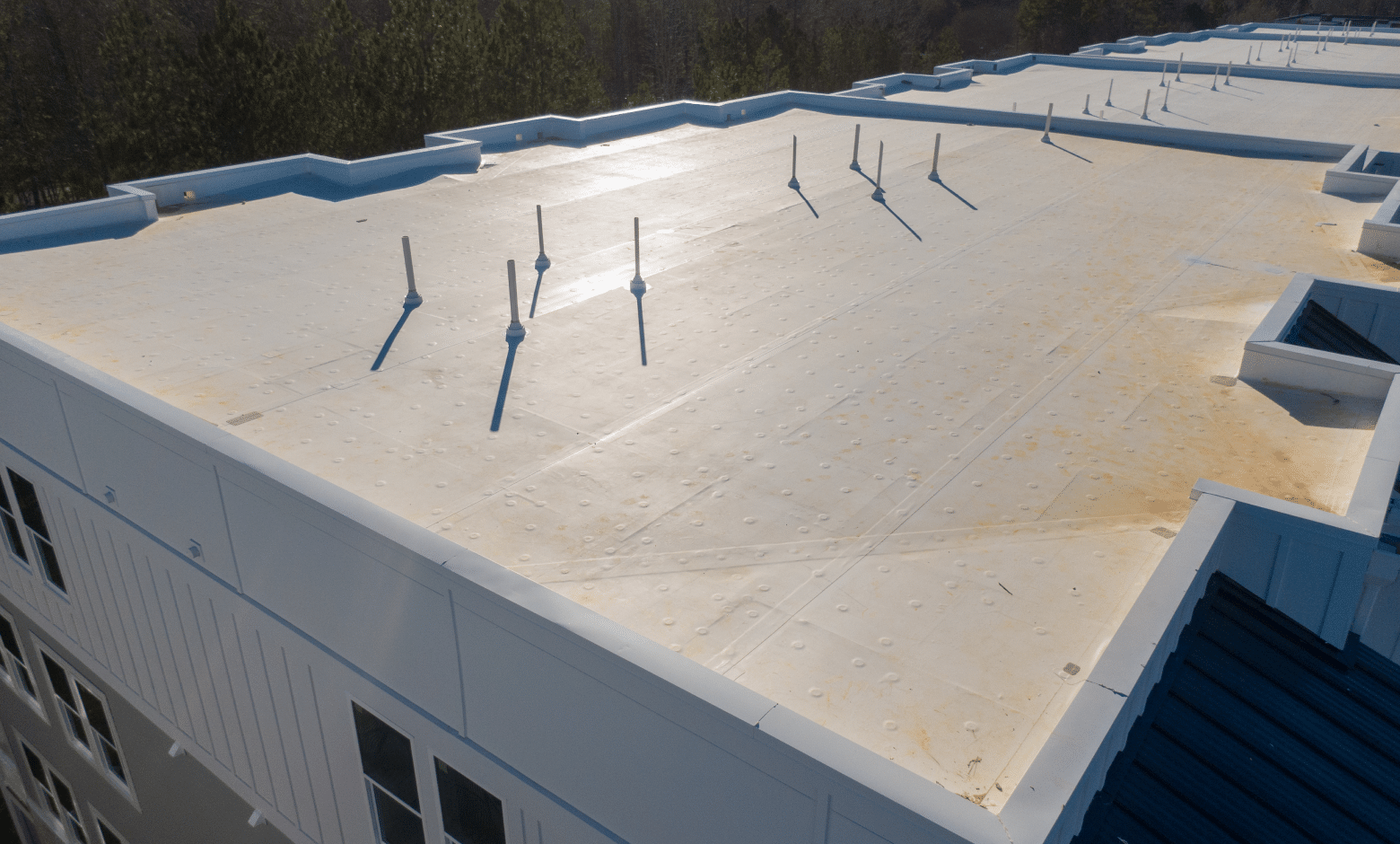
Multifamily roofing in San Antonio spans several distinct building types. The SA Uptown area - the Broadway corridor between downtown and Alamo Heights - has seen significant apartment development, including high-rise and mid-rise residential towers with flat roofs, concentrated HVAC equipment, and rooftop amenity decks that complicate reroof work. The Pearl District north of downtown has converted former industrial and commercial buildings into loft-style apartment communities - roofing on those buildings involves the original industrial construction (often metal deck with BUR or modified bitumen) layered with decades of prior reroof cycles.
The Stone Oak and Northwest San Antonio garden-style apartment inventory is the largest by unit count. US-281 North, Loop 1604, and the Sonterra corridor are dense with 200- to 500-unit garden-style complexes built in the 1990s and 2000s on wood-frame construction with pitched asphalt shingle roofs or low-slope TPO sections over the breezeway and amenity buildings. These complexes are hitting their first or second major reroof cycle, and the ownership mix - some institutional ownership, some individual investors, some HOA-managed - means the decision-making process and the budget authorization chain varies by property.
Our project managers understand the multifamily roofing environment: occupied units, lease-protected residents, property management companies with specific vendor requirements, and HOA boards that need written proposals in a format they can present to a full board meeting. We produce the documentation those audiences need.
Garden-Style Apartment Roofing - Stone Oak and Northwest SA
Garden-style apartments in Stone Oak and the Northwest San Antonio corridor are almost universally wood-frame construction with pitched asphalt shingle roofs on the residential buildings and low-slope TPO or modified bitumen sections on the clubhouse, leasing office, and covered parking canopy structures. The shingle buildings are our highest-volume multifamily work in this zone.
Shingle replacement on a 300-unit garden-style complex involves 30 to 60 individual building roofs - each with its own attic ventilation profile, its own drainage, and its own history of spot repairs. We produce a building-by-building condition assessment before scoping any large garden-style complex, because the condition of roof deck, ventilation, and existing flashings varies significantly across a 20-year-old complex. Buildings that were roofed in stages - some original, some already replaced - need a scope that accounts for each building's actual age and condition, not a blanket specification applied uniformly.
Resident communication is non-negotiable on occupied apartment complexes. We require the property management team to distribute a written resident notice before our crew mobilizes on each building. That notice covers the production schedule, the parking impacts during material delivery, and the emergency contact for the project manager. We do not show up on a residential building without advance notice.
Pearl District Loft and Mid-Rise Roofing
The Pearl District's converted industrial buildings - the former Pearl Brewery complex and adjacent structures redeveloped into mixed-use residential and retail - carry roofing histories that require investigation before scoping. Original industrial construction on metal deck with BUR or modified bitumen, covered by one or more recover layers, is common. Before we specify any recover system on a Pearl District building, we pull the original construction records if available and take core samples to understand what is already down.
Rooftop amenity decks are common on Pearl District mid-rise buildings. Amenity decks - where residents walk, sit, and use outdoor furniture - require a protected membrane system, not a standard TPO field installation. Pavers over separation fleece over a waterproofing membrane is the typical system, and the waterproofing spec on an amenity deck is a different document from a standard re-roof scope. We scope amenity deck waterproofing separately from the building's field membrane.
The Pearl District's proximity to the San Antonio River adds a humidity and drainage consideration. These buildings are in a lower-lying area relative to downtown, and the river corridor contributes to ambient humidity levels that affect moisture infiltration patterns differently than the drier northwest side of the city.
HOA and Property Management Coordination
Many San Antonio multifamily properties operate under HOA governance or are managed by third-party property management companies with specific vendor approval and proposal format requirements. Before we invest in a full scope and proposal, we confirm the vendor approval status and the proposal format the management company or HOA requires. Some Greystar and Lincoln Property Company managed communities in the Stone Oak corridor have specific insurance certificate formats and scope formats - we are familiar with those requirements.
HOA board meetings in San Antonio typically run on monthly schedules. A roofing proposal that arrives after the budget deadline may have to wait until the next cycle. We ask about the HOA's meeting schedule and the budget authorization timeline at the first conversation, so the scope delivery and board presentation can be timed to the decision cycle.
Insurance documentation is a recurring issue on multifamily roofing. When hail damage triggers an insurance claim, the property manager needs a written damage assessment in the format the insurer requires - Xactimate-compatible documentation is the standard in most markets. We produce written damage assessments for insurance purposes and can attend the adjuster walk-through with the property manager.
Frequently asked questions
How do you handle roofing on occupied apartment buildings without disrupting residents?
Resident notice before mobilization on each building. Written production schedule distributed to the property management team. No work before 7 AM or after 7 PM on residential buildings. Debris containment that protects walkways and entries below the work area. We treat an occupied apartment building as a residential environment - because that is what it is - not as a vacant commercial building where we can run the schedule without consideration for the people inside.
Can you produce a proposal in the format our property management company requires?
Yes. We have produced proposals in the formats required by Greystar, Lincoln Property Company, and several other management companies active in the Stone Oak and Northwest SA multifamily market. Send us the format requirements at the first conversation and we will deliver the scope document in the format your approval process requires.
Do you handle insurance documentation for hail damage on apartment complexes?
Yes. We produce written hail damage assessments for insurance purposes, including photo documentation keyed to each damaged area and a cost estimate in Xactimate-compatible format where required. We can attend the adjuster walk-through with the property manager and be available to answer the adjuster's scope questions directly.
Multifamily roofing scope in San Antonio?
Whether it is a Stone Oak garden-style complex or a Pearl District mid-rise, our project managers will produce a written scope that accounts for occupied units, property management requirements, and your HOA or ownership group's decision timeline.
Request a Roof Scope