
 Clear scope. Clean execution.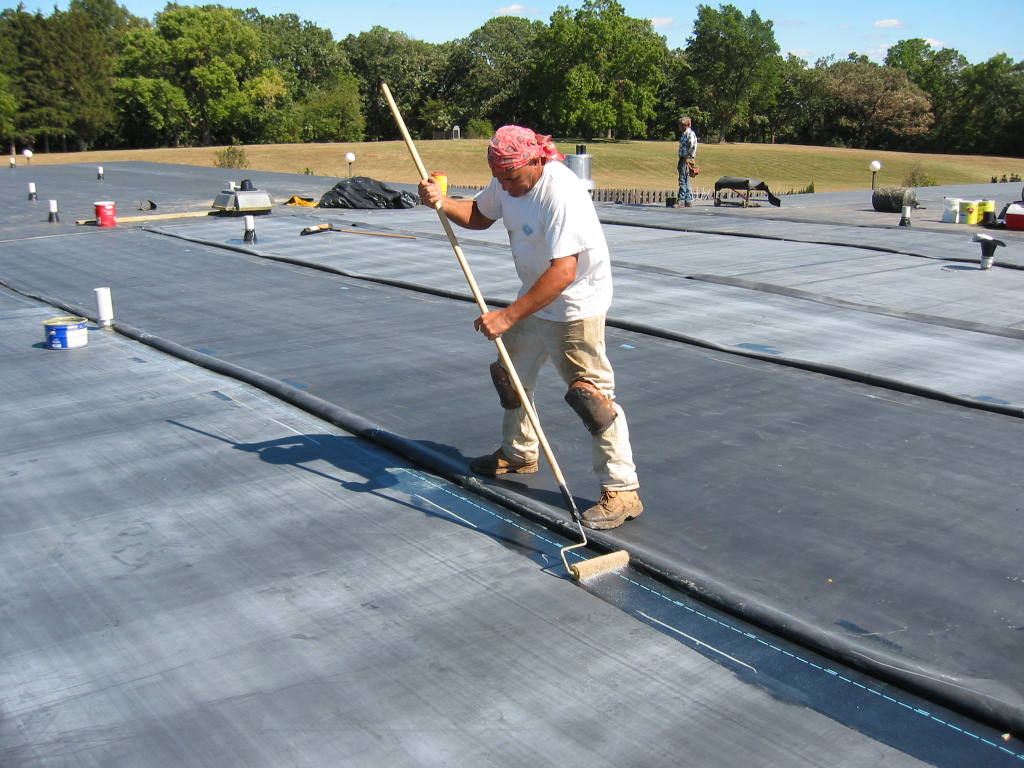
The IH-35 South industrial corridor - from the Loop 410 interchange south through the Toyota Motor Manufacturing Texas plant on Applewhite Road and into the Guadalupe County line - carries a dense concentration of distribution, manufacturing, and logistics facilities. Most of the buildings constructed in the 1990s and early 2000s in this corridor run EPDM membranes, and many of those roofs are now 20 to 30 years old. EPDM has an honest lifecycle of 25 to 35 years when properly maintained - but end-of-life EPDM presents specific failure patterns that require systematic assessment, not patch-and-pray.
We install new EPDM systems on industrial and commercial buildings across San Antonio metro and manage the assessment and replacement scoping for aging EPDM inventories. Our project managers know which IH-35 South facilities are running original ballasted EPDM from the early 1990s and which got recovered with a TPO overlay in the 2010s. That history matters when the current decision is repair, recover, or replace.
EPDM Installation Methods - Ballasted, Adhered, and Mechanically Attached
Ballasted EPDM is the system most commonly found on San Antonio's older industrial stock. The membrane is laid loose over the insulation and held in place by river-washed ballast stone - typically 1.5 inches diameter, 10 to 12 lbs per square foot. Ballasted systems are cost-effective to install and allow easy membrane replacement without adhesive residue. The tradeoff is that the ballast weight adds dead load to the structure - a consideration when ballasted recover over an existing system is proposed, since the combined weight may exceed the deck's design load.
Fully adhered EPDM bonds the membrane to the substrate with a solvent-based contact adhesive or a water-based bonding adhesive for buildings with air-quality restrictions. Adhered systems perform better in high-wind conditions - relevant for buildings along the IH-10 West corridor toward Boerne where Exposure C conditions apply - and can carry longer manufacturer warranties than ballasted systems. Installation is more labor-intensive and more weather-sensitive: contact adhesive bonding below 40°F or above 100°F produces unreliable bond strength.
Mechanically attached EPDM is common on new construction where the deck type and insulation thickness support screw-and-plate attachment. We design the fastener pattern to the ASCE 7-22 wind uplift requirements for the building's specific location and exposure category. Most San Antonio industrial buildings fall in Exposure B, but buildings at the urban edge - the northern end of the IH-35 corridor toward New Braunfels or the western industrial parks near Boerne - may require Exposure C calculations.
Assessing the 1990s EPDM Install Base
EPDM installed in the late 1980s and 1990s used solvent-based splice adhesives and seam tapes that have a shorter useful life than the membrane itself. The most common failure mode on 25- to 35-year-old EPDM is seam delamination - the splice adhesive or tape fails, allowing the lap to open and admit water before the membrane itself shows any degradation. We probe every seam on EPDM roofs over 20 years old during our inspection walk.
Shrinkage is the second aging characteristic of older EPDM. The membrane contracts slowly over time, pulling flashings away from parapets, pipe boots, and equipment curbs. On ballasted roofs, shrinkage is visible as the membrane pulling toward the center of the field with the ballast following. On adhered roofs, shrinkage shows up as flashing separation at the perimeter before the field membrane shows any distress.
After our assessment, we produce a written scope with three options: targeted repair of failed seams and flashings (appropriate for roofs with under 20% seam failure rate and no insulation saturation), recover with a new single-ply system over the existing EPDM (appropriate for roofs with dry insulation and structurally sound decks), or full tear-off and replacement (required when insulation is saturated or deck deterioration is found). We give the owner the cost for each option and a clear recommendation.
EPDM for Specific San Antonio Building Types
Large-footprint industrial: The distribution and manufacturing facilities on the IH-35 South corridor near the Toyota Manufacturing campus typically run 100,000 to 500,000 sq ft of flat roof. EPDM ballasted at 60-mil is still a competitive system for these buildings on replacement - the lower installed cost relative to TPO and the proven long-term track record in large-footprint applications make it appropriate where mechanical-traffic risk is low and rooftop aesthetics are not a factor.
Cold-storage and food processing: EPDM performs well in cold-storage environments where TPO's heat-welded seams can be problematic near refrigeration equipment penetrations. The all-rubber chemistry tolerates the temperature differentials between cold-storage roof zones and ambient roof surface zones without the seam stress that thermoplastic membranes can develop.
Older warehouse recover projects: When a ballasted EPDM roof has dry insulation and a sound deck, a TPO or EPDM recover layer over the existing membrane avoids tear-off cost and landfill disposal. We verify recover eligibility with moisture cores before quoting the recover path. On buildings where the existing ballast must be removed to execute the recover, the economics shift toward full replacement.
Frequently asked questions
How long does EPDM last on a San Antonio industrial building?
EPDM has an honest useful life of 25 to 35 years in San Antonio conditions with proper maintenance. The membrane itself holds up well against the UV load and the thermal cycling - the failure points are the seam adhesives and the flashings, which need inspection and maintenance every 5 to 7 years. EPDM installed in the early 1990s on San Antonio IH-35 South corridor warehouses is at end of useful life now, and we are scoping those replacements regularly.
Should I recover my existing EPDM with TPO or replace it with new EPDM?
It depends on insulation condition, deck condition, and the owner's capital horizon. If the existing insulation is dry and the deck is sound, a TPO recover over EPDM is a legitimate cost-saving path - you get a new reflective white membrane at roughly half the cost of full tear-off. If the building needs to stay dark-surface for aesthetic reasons, or if the existing ballasted system's weight already limits your recover-layer options, new EPDM may be the right choice. We lay out both options in writing with costs.
Is EPDM appropriate for San Antonio's heat?
Standard black EPDM absorbs solar radiation and runs hot - surface temperatures can reach 175°F on a black EPDM roof in San Antonio's July heat, which exceeds the dark TPO surface temperature. White-coated or white-surfaced EPDM is available and provides reflectivity comparable to TPO. For most San Antonio industrial applications where heat reflectivity matters, we recommend either white EPDM or a TPO system. We specify black EPDM when the substrate chemistry, mechanical traffic conditions, or recover application warrants it.
Assessing an aging EPDM roof on a San Antonio industrial building?
We walk the roof, probe the seams, pull moisture cores, and produce a written scope with repair, recover, and replacement options - costs and recommendations included.
Request a Roof Scope