
 Clear scope. Clean execution.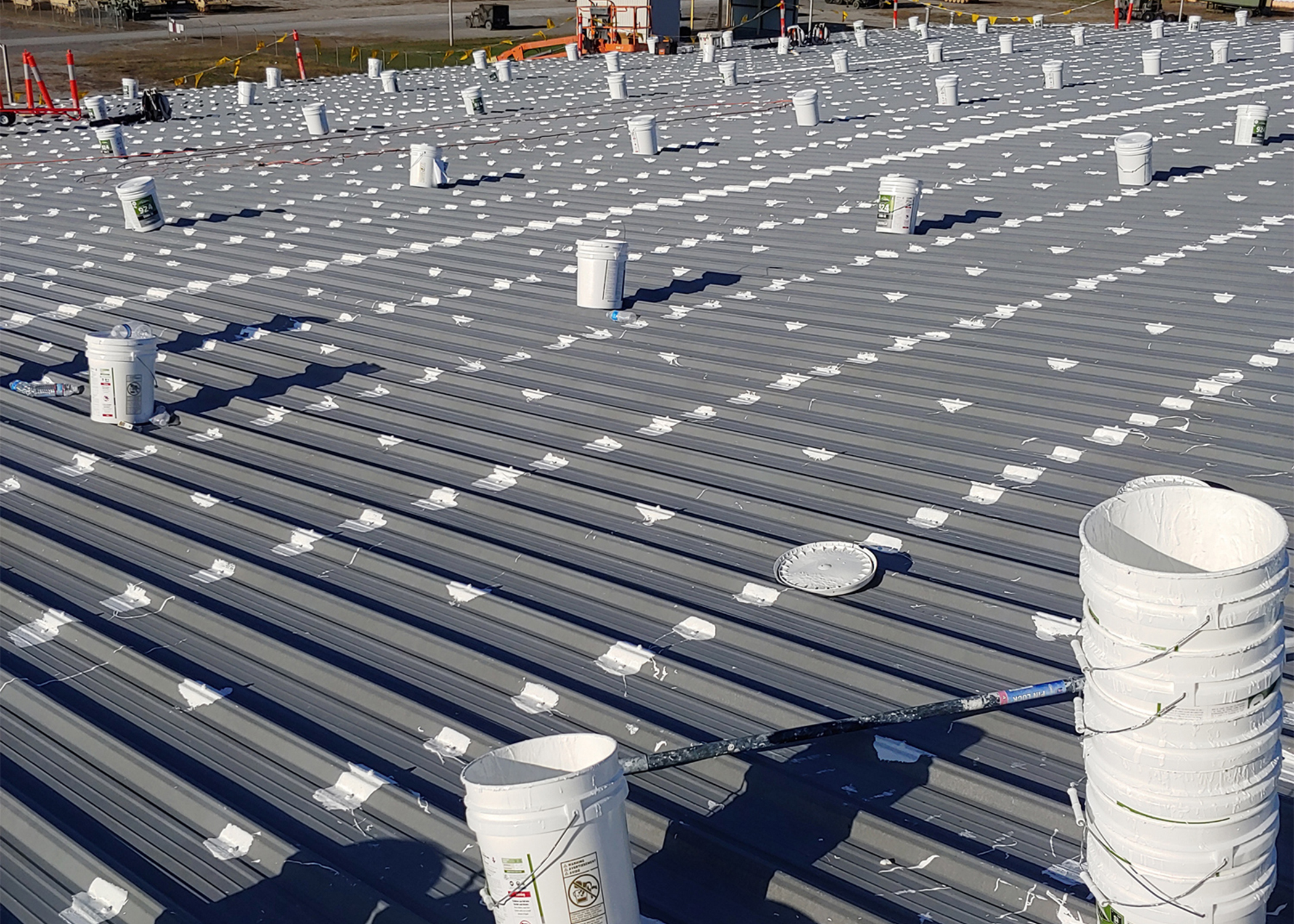
San Antonio receives more annual solar radiation than most U.S. commercial markets. The city's latitude - roughly 29.4 degrees north - and the predominantly clear sky conditions that come with being on the drier side of the Balcones Escarpment produce a UV index that stresses roofing membranes faster than the same systems experience in San Antonio or Houston. A commercial roof membrane that qualifies for silicone restoration - dry insulation, sound membrane, no systemic seam failure - can carry a manufacturer-warranted silicone coating at roughly 50 to 60 percent of full replacement cost, with the additional benefit that silicone's UV stability is specifically well-suited to San Antonio's solar load.
We apply silicone coating systems from manufacturers including Tremco WJ, Henry, and Polyglass. We are not a coatings-only contractor pushing silicone as the answer to every aging San Antonio roof. A coating applied over wet insulation or a compromised membrane will fail its manufacturer warranty inspection and void coverage in the first year. Every coating inquiry we receive starts with a substrate assessment - if the roof does not qualify, we say so and scope the correct alternative.
The three warranty paths - 10-year, 15-year, and 20-year - are driven by application mil thickness, coating pass count, substrate type, and the manufacturer's system design package. The 20-year path requires the most material and the most prep labor, but produces the lowest lifecycle cost per year for San Antonio buildings with a longer capital horizon - and it is the path that makes the most sense on a San Antonio roof where the UV load would otherwise accelerate aging on a thinner system.
When Silicone Coating Is the Right Scope
A San Antonio commercial roof qualifies for silicone restoration when three conditions are met: the insulation is dry (confirmed by moisture core sampling at 5 to 10 locations per roof), the existing membrane is structurally sound with no open seams or delaminated sections, and the deck is not compromised. Buildings that
The most common qualifying substrates on San Antonio commercial buildings are: existing TPO that is 10 to 20 years old and in good membrane condition; modified bitumen cap sheet in good surface condition; and spray polyurethane foam that is at its scheduled re-coating interval. Many of the 2000s-era commercial buildings on the Stone Oak US-281 corridor, the Sonterra office parks, and the Loop 1604 retail and industrial buildings are now in the 15 to 22-year age range - within the qualification window for silicone restoration on the buildings where the membrane has held condition.
San Antonio's heat creates one timing consideration specific to this market: qualifying roofs should be assessed and coated before they reach the point where the UV load has degraded the membrane surface to a chalky, oxidized texture that cannot provide adequate coating adhesion. We see this accelerated surface oxidation on south- and west-facing roof sections - the faces that take the maximum afternoon solar load - at earlier ages than on north and east exposures. Our inspection notes surface condition by orientation so the owner understands the coating window available on each zone.
Substrate Prep - Where the Warranty Outcome Is Determined
Silicone coating adhesion and long-term performance depend entirely on substrate preparation. Standard prep sequence on a San Antonio commercial coating project: pressure washing to remove all contamination, surface oxidation, biological growth, and any loose aggregate (we run 3,500 to 4,000 PSI on field areas, lighter on seams and flashings to avoid forcing water under laps); full inspection and documentation of any open seams, failed flashings, and wet areas that need repair before coating; targeted repair of all deficiencies - seam repair, flashing re-termination, drain reset - with materials compatible with the specified coating system; and manufacturer-specified primer application on substrates that require it.
San Antonio's summer heat creates two prep complications not present in cooler markets. First, the intense UV load means the washed surface must be coated within the manufacturer's specified window after washing - UV exposure to a cleaned, bare membrane can cause surface re-oxidation within hours. We schedule coating immediately after prep rather than leaving washed membrane exposed for extended periods between days. Second, San Antonio's summer humidity, even on clear days, can sit above 60 to 70 percent relative humidity during late morning and afternoon - some silicone formulations have application windows that close above these humidity levels. We check and log ambient conditions before every application session and reschedule when conditions fall outside the manufacturer's application window.
Application goes in two or more passes to achieve the specified dry-film thickness. We verify wet-mil thickness after every 1,000 square feet of application using a wet-mil gauge - silicone cannot be added after cure without additional primer preparation, so under-mil areas have to be caught during application, not at the manufacturer's warranty inspection.
Warranty Paths - 10, 15, and 20 Years
Ten-year warranty systems apply a minimum 20-wet-mil dry-film thickness in two passes. This is the entry-level restoration path, appropriate for San Antonio building owners with a 10 to 15-year capital horizon who want a warranted watertight system at the lowest restoration cost. On San Antonio roofs, we are cautious about recommending the 10-year minimum on west and south exposures that take the highest UV load - thinner systems on high-UV surfaces show earlier surface degradation than the same systems on shaded or north-facing sections.
Fifteen-year systems apply 25 to 30 dry-mil in two or three passes, typically with a reinforcing fabric embedded in the base coat at flashings and seams. The fabric reinforcement is what converts a surface coating into a warranted flashing assembly - and it is the item the manufacturer's field representative inspects before issuing warranty. On San Antonio roofs with significant parapet lengths or penetration-dense equipment, the fabric detail adds real labor cost but meaningfully changes the warranty coverage.
Twenty-year systems apply 30 to 35 dry-mil in three passes with full fabric reinforcement at all seams and flashings. This is the maximum warranty path on fluid-applied silicone and produces the lowest lifecycle cost per year for San Antonio buildings with a long capital horizon. Some manufacturers require a pre-application inspection by their field representative before the 20-year warranty is issued - we schedule and coordinate that inspection as part of our project closeout.
Frequently asked questions
How do I know if my San Antonio commercial roof qualifies for silicone coating?
We walk the roof, pull 5 to 8 moisture cores at representative locations, and inspect the membrane for open seams, delamination, surface oxidation condition, and flashing integrity. The inspection takes 2 to 3 hours on a typical 50,000 square foot building. We produce a written qualification assessment - qualifies (with substrate conditions documented by zone) or does not qualify (with the replacement recommendation and reasoning). Our inspection is no-charge on buildings where we have a reasonable prospect of earning the project.
Can silicone coating fix an actively leaking San Antonio roof?
No. Active leaks indicate either open membrane defects or wet insulation - both of which disqualify the substrate for a warranted coating application. We repair the leak source first, verify the insulation is dry, and then assess coating eligibility. If moisture core sampling shows wet insulation across more than 25 percent of the roof area, coating is not the right path and we will tell you so directly.
Can a silicone coating be recoated when the warranty expires?
Yes - and this is one of silicone's long-term advantages over single-ply membrane replacement. A properly applied silicone system can be recoated at the end of its warranty term with a 10 to 15 mil recoat pass over the existing silicone, renewing the warranty at a fraction of the original installation cost. Over a 30-to-40-year capital horizon on a qualifying San Antonio commercial building, the total silicone restoration cost over two or three cycles is substantially lower than repeated single-ply replacement.
Wondering if your San Antonio commercial roof qualifies for silicone restoration?
We will walk the roof, pull moisture cores, and produce a written substrate assessment - with coating warranty paths and installed cost estimates, or an honest replacement recommendation if coating is not the right scope for your building.
Request a Roof Scope