
 Clear scope. Clean execution.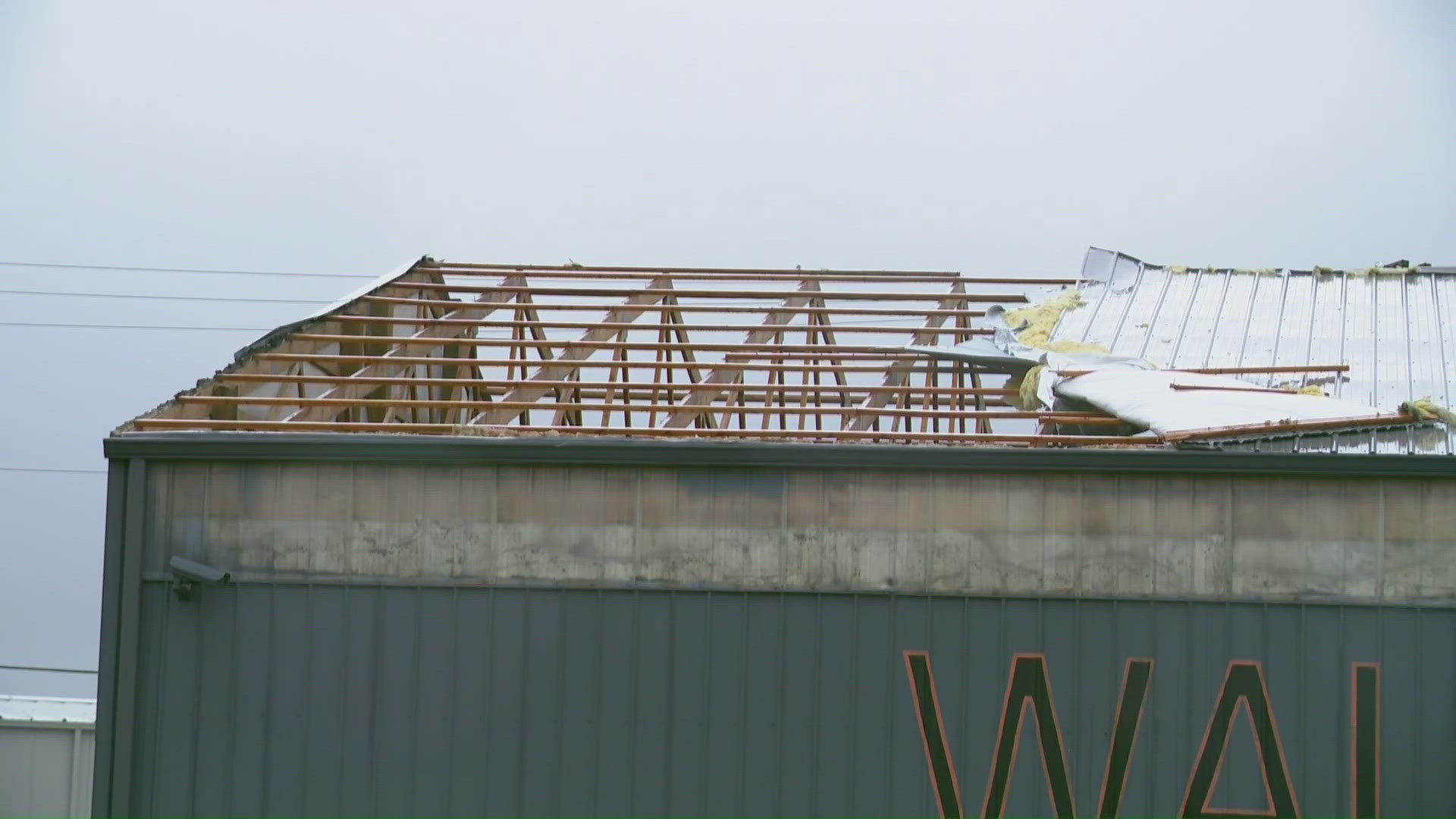
Tornado events in the San Antonio metro are rare but not unprecedented. The Bexar County area has recorded EF0 and EF1 touchdowns in scattered locations over the past two decades, and the Hill Country storm cells that produce hail and straight-line wind also create the rotational conditions for brief touchdowns, particularly along the northern Loop 1604 corridor and the US-281 Belt - areas where terrain exposure increases the wind energy available for rotation.
A tornado event on a commercial roof is categorically different from a hail or straight-line wind event in terms of documentation complexity. A tornado creates extreme localized uplift - membrane blow-off, deck separation, structural damage to parapet walls and rooftop equipment - in a narrow path, alongside relatively undamaged areas on the same roof. Mapping the damage distribution precisely is critical for both the repair scope and the insurance claim, because the adjuster needs to understand the damage footprint to evaluate the coverage request.
I inspect tornado-affected commercial roofs with the same structured approach I bring to every event: a roof zone diagram, a photo log keyed to zones, a written narrative, and a line-item repair scope. For tornado events I add a damage path mapping overlay - a top-down diagram of the roof showing the extent and orientation of the damage zone - which is useful both for the repair scope and for the adjuster's claim file.
What a Tornado Does to a Commercial Flat Roof
Extreme uplift at the damage path center: In the direct track of even an EF0 tornado, roof membrane can experience uplift pressures far exceeding the design wind load the fastener pattern was specified for. Mechanically attached single-ply membrane fastened for 90-mph design wind may pull through when subjected to 110 to 130 mph rotational uplift. The result is membrane blow-off across the damage path, with the fastener plate and membrane disc pulling through the membrane at every fastener location simultaneously.
Deck exposure and structural damage: Membrane blow-off exposes the insulation and, in severe cases, the deck below. Metal deck sections can lift partially or fully in EF1 events, especially at edge zones where the wind has direct access to the underside of the deck. Partial deck lift tears structural connections and may require a structural engineer's assessment before roofing repair work can begin - we flag this in the initial inspection and coordinate with the building's engineer.
Debris impact: Tornado events carry airborne debris - tree limbs, signage, rooftop equipment from adjacent buildings - that produces impact damage distinct from hail. Debris impacts are typically larger and deeper than hail impacts and can puncture membrane or deform metal deck. We document debris impact separately from wind uplift because the failure mode and repair method differ.
Progressive damage from the perimeter inward: On buildings not directly in the tornado's path but close to it, the strongest effect is often at the perimeter edge metal, where the rotational wind creates uplift pressure from an unusual angle. Edge metal failures on the leading edge of the damage path can initiate progressive membrane peeling that extends well beyond the area of direct wind exposure.
Tornado Damage Documentation for San Antonio Commercial Buildings
Damage path mapping: We produce a top-down diagram of the roof overlaid with the damage zone extent and orientation. This diagram, combined with NWS San Antonio storm survey records (which document the tornado's track and EF rating), gives the adjuster a defensible spatial record of the damage distribution.
Pre-event condition distinction: Tornado events attract coverage disputes more than most because of the extreme damage values involved. Our inspection explicitly documents the pre-event condition of materials in and adjacent to the damage path - the weathering pattern, the age of existing repairs, the condition of undamaged field membrane - so the adjuster can distinguish tornado damage from pre-existing deterioration in the affected zones.
Structural assessment coordination: When we identify potential structural damage - partial deck lift, parapet wall displacement, rooftop equipment overturn - we pause the roofing scope and coordinate with a licensed structural engineer before beginning repair work. Proceeding with roofing work over a damaged structural element creates a safety risk and a scope complication that no insurance claim is worth.
Frequently asked questions
Do tornadoes actually hit San Antonio commercial properties?
EF0 and EF1 events occur in the Bexar County metro several times per decade - not the frequency of the DFW or central Oklahoma corridor, but real events with real damage. The northwestern Bexar County and Guadalupe County areas near the Hill Country terrain transition have the most recorded touchdown activity. Commercial buildings in those areas - the Stone Oak corridor, the Loop 1604 suburban ring, the New Braunfels IH-35 corridor - are within the realistic damage zone.
When should I not let anyone on the roof after a tornado event?
Do not allow roof access until you have visual confirmation from the ground that the deck is intact and no structural members are displaced. Visible deck deflection, parapet wall lean, or rooftop equipment displacement are all indicators that a structural assessment is required before roof access. We will tell you this on the initial call if the damage description suggests structural involvement - we do not send crews onto structurally compromised roofs.
How does tornado repair differ from a standard wind damage repair in terms of scope and cost?
Tornado damage is typically more concentrated and more severe than straight-line wind damage. The repair scope often involves membrane replacement across large sections rather than perimeter repair, potential deck repair or replacement in the direct track, and equipment re-anchoring or replacement. For a meaningful tornado event the scope overlaps with a partial roof replacement rather than a standard storm repair. We provide the line-item scope so the adjuster can see exactly what each element costs.
Tornado or severe wind damage to a San Antonio commercial building?
We document the damage path, scope the repair, and produce a report your adjuster can use - without inflating the event-related column or hiding what was already there.
Request a Roof Scope