
 Clear scope. Clean execution.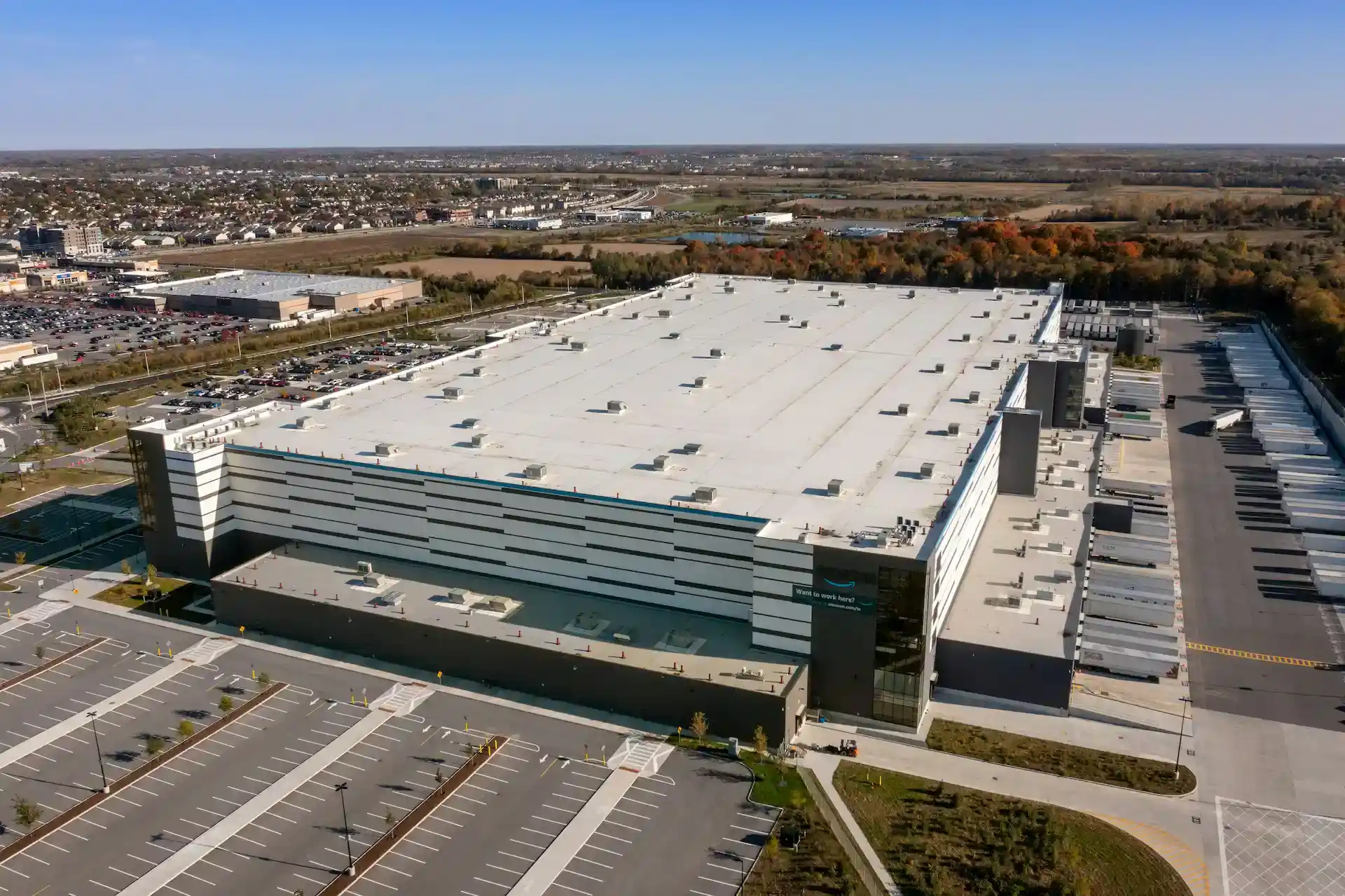
Warehouse and Distribution Center Roofing in San Antonio, TX
H-E-B operates a massive distribution campus on Rittiman Road in San Antonio, serving its network of Texas grocery stores and functioning as one of the largest privately-operated food distribution facilities in the Southern United States. Warehouse owners throughout the San Antonio metropolitan area - from the Port San Antonio logistics campus on the former Kelly Air Force Base to the rapidly expanding distribution parks along Loop 130 - operate in one of the hottest and most storm-exposed warehouse markets in the country, with additional complexity from the Texas Hill Country's sporadic but severe hail events.
TPO is the overwhelmingly dominant membrane for San Antonio warehouse construction, driven by Texas's energy code requirements (based on ASHRAE 90.1, climate zone 2A for San Antonio) and the membrane's superior performance under the extreme UV loads of South Texas summers, where rooftop temperatures on dark membranes can exceed 180 degrees Fahrenheit. White 60-mil TPO on mechanically attached polyiso insulation achieving R-20 minimum (the Texas code requirement for climate zone 2A) is the standard specification, though many large distribution center developers in San Antonio have moved to R-25 or higher for lifecycle energy savings. The Texas heat makes a white reflective membrane not just a code compliance tool but a genuine energy cost management instrument.
Drainage on a San Antonio warehouse is shaped by the region's intense convective storm events. San Antonio sits at the climatological convergence zone where Gulf moisture meets Continental dryline activity, producing some of the most intense rainfall rates in the continental United States during spring and summer. The National Weather Service has recorded events exceeding seven inches in one hour at San Antonio area gauges. Primary drains must be sized using the San Antonio area IDF curves from the San Antonio River Authority or Texas A&M University's Texas Water Development Board data, not national defaults. Overflow scuppers through the parapet are mandatory, and the sizing calculation should be based on the 100-year, 1-hour intensity for the specific project location.
Hail is a defining risk for San Antonio warehouse roofs that does not exist at the same severity in most other major warehouse markets. The Hill Country north of San Antonio is part of "Hail Alley," and the city itself experiences damaging hail events - stones one inch in diameter or larger - multiple times per decade. A standard 45-mil TPO membrane has limited resistance to large hailstone impact; specify 60-mil minimum and consider an 80-mil membrane if the facility stores high-value merchandise and has limited tolerance for emergency repair disruption. FM 4473 Class 4 hail impact resistance certification is the appropriate standard for a San Antonio warehouse roof membrane; confirm the membrane's classification before specifying.
Dock penetration flashing in San Antonio must handle extreme thermal expansion - a metal counterflashing cycling from 45 degrees in January to 160 degrees in August undergoes more than 100 degrees of daily swing at peak season - and must resist the wind-driven rain that accompanies Gulf Coast low-pressure systems. Two-piece reglet flashings with open expansion joints sealed with a polyurethane or silicone product rated for extreme heat are the standard detail. Counterflashings specified with a standard latex caulk will be replaced within three to four years as the caulk hardens and cracks under San Antonio's UV and thermal loading.
Forklift exhaust ventilation and battery charging station fume extraction penetrations in San Antonio warehouses face the thermal challenge common throughout Texas, where equipment curb metal reaches temperatures that accelerate the degradation of improperly specified adhesives and sealants. All penetration curbs must be insulated through the curb wall to prevent not only condensation in winter but also heat transfer that degrades the membrane adhesive at the base of the curb in summer. Specify a minimum 3-inch closed-cell spray foam or rigid board insulation layer on all curb walls before applying the membrane flashing strip.
Texas energy code for commercial buildings (2021 IECC as adopted by the Texas State Energy Conservation Office) requires minimum R-20 CI for low-slope roofs in climate zone 2A and cool-roof compliance for large commercial buildings. San Antonio's Bexar County and the City of San Antonio both require building permits and inspections for commercial roofing, though Texas does not have a mandatory state roofing contractor license. The Texas Department of Licensing and Regulation (TDLR) regulates general contractors and some specialty trades, but roofing specifically is not regulated at the state level. This creates a lower barrier to entry for unqualified contractors; verify insurance, bonding, and manufacturer-approved contractor status rigorously before contract execution.
Preventive maintenance on a San Antonio warehouse roof must include pre-storm-season preparation in March, mid-season inspection in June, and post-storm assessments after any event producing hail above three-quarters of an inch or sustained winds above 50 mph. San Antonio's storm season runs from March through October, meaning that there is essentially no low-risk window to defer maintenance. Budget $0.09 to $0.13 per square foot annually for a well-managed maintenance program, and retain a local roofing contractor on a maintenance agreement that includes an emergency response clause for post-storm assessments within 24 hours.
When evaluating contractors for a San Antonio warehouse roofing project, hail resistance specification knowledge and storm claim management experience are differentiating qualifications beyond basic installation competence. A contractor who can guide you through an FM Global or insurance-carrier hail damage claim process - including documentation, sampling, and negotiation with the adjuster - is worth a premium over a contractor who only installs and does not manage the lifecycle of the roof system. References from other San Antonio logistics operators who have experienced hail claims are particularly valuable in this market.
- What hail resistance rating should a San Antonio warehouse roof have?
- FM 4473 Class 4 hail impact resistance is the appropriate standard for San Antonio. Specify a 60-mil minimum TPO membrane with a Class 4 rating and confirm the membrane's FM 4473 certification from the manufacturer before approving the product submittal. An 80-mil membrane provides additional protection for facilities storing high-value inventory.
- How should San Antonio warehouse roof drains be sized?
- Use IDF data from the San Antonio River Authority or Texas Water Development Board for the specific project location. San Antonio is in one of the highest-intensity rainfall zones in the continental United States; drains sized using national default tables will be significantly undersized for the worst-case events that the region experiences multiple times per decade.
- Does Texas require a roofing contractor license for warehouse projects?
- Texas does not have a state roofing contractor license. This makes contractor qualification due diligence more important than in licensed states. Verify current general liability insurance (minimum $2 million), workers' compensation coverage, and manufacturer-approved contractor status before signing any contract for a large warehouse roofing project.
- What energy code applies to San Antonio warehouse roofs?
- San Antonio is in ASHRAE 90.1 climate zone 2A, which requires minimum R-20 continuous insulation and cool-roof reflectance compliance for large commercial roofs under the 2021 IECC as adopted by Texas. Many developers specify R-25 or higher for lifecycle energy savings given San Antonio's intense cooling season.
- How does San Antonio's heat affect TPO membrane seam longevity?
- Heat-welded TPO seams perform well in San Antonio's climate because the welding process fuses the membrane into a single monolithic sheet - unlike adhesive lap joints, which are more vulnerable to thermal cycling. The risk is that seams welded during the peak summer heat require careful temperature monitoring to avoid over-welding, which can thin and weaken the membrane at the weld line. Probe test all seams regardless of season.