
 Clear scope. Clean execution.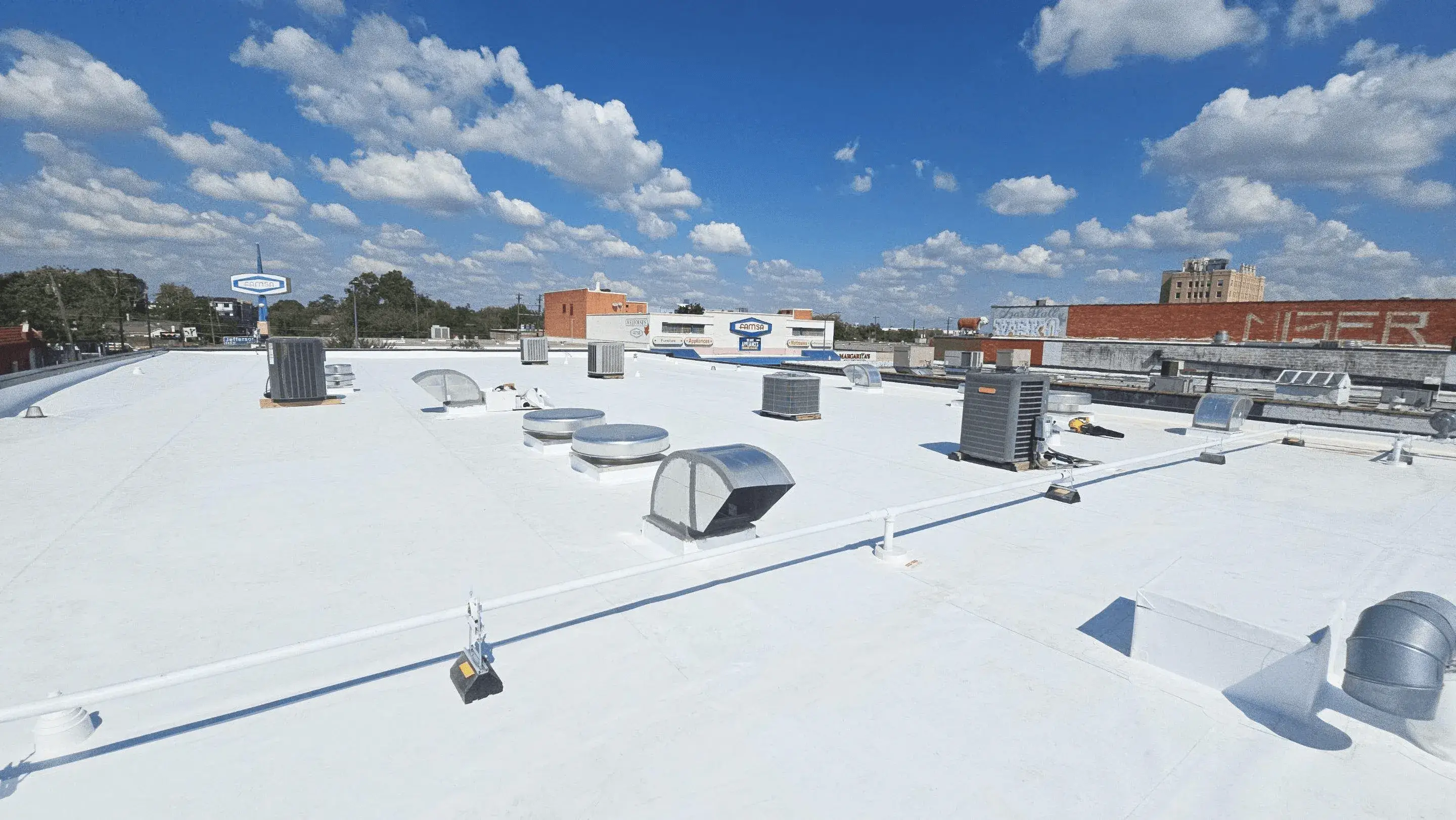
Most commercial roof replacement failures in San Antonio are not membrane failures. They are planning failures. The replacement was scoped quickly, bid in two weeks, awarded to the lowest number, and started before permits were pulled. The building's tenants found out about the crane by watching it arrive. The closeout package is a handshake and a warranty card filed in a drawer that nobody can find three years later.
Pre-construction planning and closeout documentation are non-negotiable components of every replacement project we manage - not optional value-adds. These are the pieces that determine whether the manufacturer warranty is enforceable when the owner needs it, whether the building's next facility manager understands what system is on the roof, and whether the project created goodwill or disruption with the tenants working inside the building during production.
San Antonio adds specific complexity to replacement planning that smaller markets do not face. The City of San Antonio Development Services Department processes commercial roofing permits at a pace that varies with construction volume - plan ahead. Downtown buildings near Alamo Plaza, the Riverwalk corridor, and HemisFair Park require right-of-way coordination for crane staging and street access that the City's Transportation and Capital Improvements department manages separately from the building permit. Buildings in or adjacent to San Antonio's historic district overlays require coordination with the Office of Historic Preservation on any scope element that could affect visible exterior character. Summer heat requires production sequencing that limits tear-off to early morning hours. All of this has to be built into the project plan before the first crew arrives.
Pre-Construction: Permits, Mobilization, and Tenant Notification
Permits: We pull the building permit with the correct jurisdiction before crews mobilize - this is non-negotiable regardless of timeline pressure. For buildings within the City of San Antonio, we submit the permit application to the Development Services Department with the full construction document package at contract signing: system specification, product data, fastener pattern calculation, energy code compliance documentation. The Development Services permit review timeline for commercial roofing varies - currently running 7 to 12 business days on straightforward projects, longer during high-construction-volume periods. We account for actual review time in the project schedule. For buildings in adjacent jurisdictions - Leon Valley, Converse, Live Oak, Schertz - we pull through the applicable municipality and adjust the timeline accordingly.
Mobilization plan: We produce a written mobilization plan that covers material delivery staging (where membrane roll goods land, where insulation pallets stage), crane or material hoist location with stabilizer and outrigger pad requirements, dumpster placement (City of San Antonio requires a right-of-way permit for dumpsters placed in the street - this is a separate permit from the building permit and takes additional lead time), and parking displacement impact on building tenants. On parking-constrained projects - medical buildings near the South Texas Medical Center, office buildings on the US-281 North corridor - we coordinate temporary parking arrangements before contracts are signed, not after the crew's equipment occupies the surface lot.
Tenant notification: We draft the tenant notification letter and distribute it through the building's property management team at least 14 days before production start. The letter specifies: production start date, expected duration by roof zone, what tenants will experience (noise levels, crane presence, material handling above occupied space), how emergency building access will be maintained throughout the project, and a direct contact name and number for tenant concerns. We issue a second notification 48 hours before start and a same-day notification on any day where production sequence moves to a new building zone that changes the impact pattern below.
Production Sequencing - Section Management, Heat, and Safety
Production sequencing follows a section-management approach: we tear off and dry-in each section on the same day, so the building interior is never exposed to an overnight or weekend rain event. Section size is set by the crew's realistic same-day production capacity - typically 5,000 to 10,000 square feet per day on a standard flat-roof replacement, smaller sections when deck replacement or complex flashing areas are in that day's zone.
San Antonio summer scheduling is not a preference - it is a quality control requirement. We schedule tear-off and membrane installation during the early morning window (6 AM to noon) from June through September. TPO hot-air welds begin to fail consistency when substrate temperature exceeds 130°F, which San Antonio dark-substrate roofs regularly reach before noon on clear summer days. EPDM bonding adhesive application is similarly temperature-sensitive above 130°F substrate. We start early or we do not start. If an owner's access restrictions or tenant operations prevent 6 AM start times during the summer months, we discuss the scope and sequencing implications honestly before signing the contract.
Hot-work permit and fire watch: any torched modified bitumen application requires a hot-work permit coordinated with the building's fire marshal and a 30-minute post-torch fire watch. We schedule these with the building's facility contact before the project begins. Buildings near the Riverwalk corridor and Alamo Plaza with adjacent high-occupancy properties have fire watch requirements that go beyond the standard protocol - we identify these buildings in pre-construction and coordinate with the facility manager on the additional requirements.
Closeout Package - The Permanent Project Record
The closeout package is the project's permanent record. It is what the manufacturer's warranty inspector looks at five years from now when there is a claim, what the building's next owner's due diligence team reviews when they acquire the property, and what the facility manager's successor uses to understand what system is on the roof and what documentation supports it.
Our standard closeout package includes: the manufacturer's warranty document signed and with the registration number that allows independent online verification; the roof zone diagram - a to-scale drawing of the roof with zones labeled, all drains marked, all penetrations documented, and every closeout photo keyed to its location on the plan; the project specification and product data sheets for every material installed; the fastener pattern calculation record; the insulation R-value documentation for IECC energy code compliance; the permit and inspection record including City of San Antonio Development Services sign-off and any applicable municipal inspection records; and the first-year maintenance schedule with our maintenance program contact information.
We deliver the closeout package digitally - organized PDF by section - and in hard copy within seven business days of the manufacturer warranty inspection. We also submit the warranty registration to the manufacturer at project completion. Warranty registrations that are left to the owner to file often do not get filed - and an unregistered warranty has limited value when the owner needs to make a claim.
Frequently asked questions
How long does permitting take for a commercial roof replacement in San Antonio?
City of San Antonio Development Services Department commercial permits for roof replacement currently run 7 to 12 business days from complete-application submission during normal volume periods. We have seen review extend to 15 to 20 business days during high-construction quarters. We submit at contract signing and set the production start date based on the actual permit issue date, not an assumed timeline.
What happens if it rains during my San Antonio roof replacement?
Production sections are dried in same-day - if we open a section we dry it in before the end of the workday regardless of how much production we complete. San Antonio's summer afternoon thunderstorm pattern is predictable enough that we limit morning tear-off to a section size we can realistically dry-in before early afternoon. We monitor the National Weather Service San Antonio forecast daily and adjust section size plans when afternoon storm probability exceeds 40 percent.
Do you handle the manufacturer warranty inspection, or does the building owner?
We coordinate the manufacturer warranty inspection - scheduling the manufacturer's field representative, accompanying them on the inspection walk, and managing any deficiency corrections before the warranty is issued. The owner receives the executed warranty document with the registration number at closeout, not a promise that the warranty will be registered at some future point.
Planning a roof replacement on a San Antonio commercial building?
Our project managers will walk the roof, produce the replacement scope, and walk you through the full project plan - permits, mobilization, production sequencing, and closeout - before you commit to a contract.
Request a Roof Scope