
 Clear scope. Clean execution.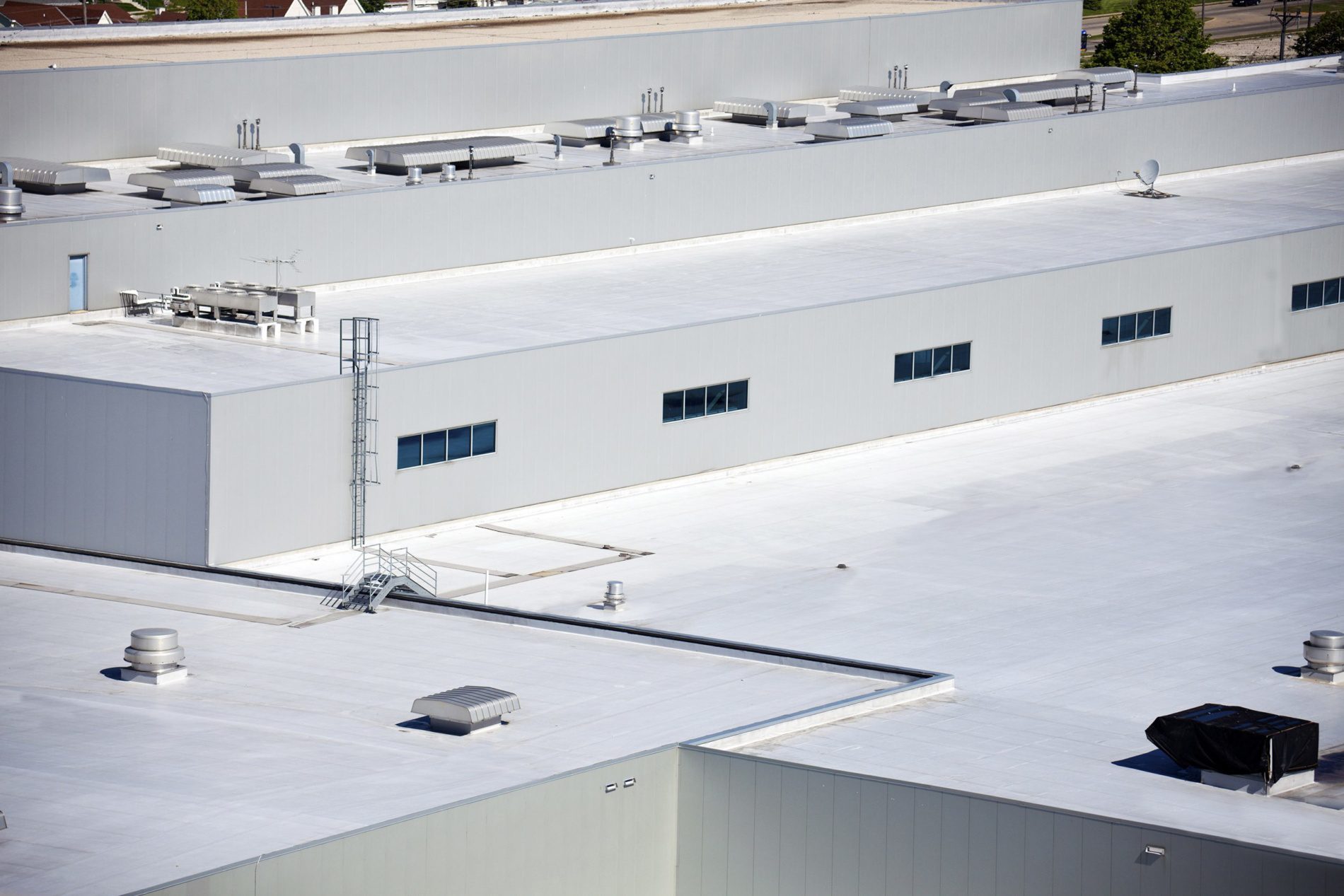
Manufacturing Facility Roofing in San Antonio, TX
San Antonio's manufacturing economy is defined by two anchor employers that represent opposite ends of the industrial spectrum: Toyota Motor Manufacturing Texas, which produces Tundra and Tacoma pickups at its massive 2,000-acre campus on the south side, and Boeing's military aircraft maintenance and modification operations at Kelly Field Annex, a defense manufacturing hub employing thousands of workers servicing KC- specialized demands on commercial roofing systems that go well beyond the requirements of a standard distribution warehouse.
Automotive manufacturing at Toyota's San Antonio plant generates welding fumes, paint solvent vapors, and the complex chemical signature of a full paint shop and body assembly operation. Paint booths and their exhaust systems deposit paint overspray and solvent-laden air across adjacent rooftop surfaces. Roofing membranes within the influence zone of paint exhaust stacks require chemical resistance documentation specific to the automotive paint systems in use-typically polyurethane and waterborne basecoat/clearcoat formulations. Sixty-mil TPO with heat-welded seams has proven reliable in automotive assembly plant environments across the country, provided the system is specified with awareness of the specific paint chemistry rather than generic automotive ratings.
Boeing's military aircraft maintenance operations at Kelly Field involve hydraulic fluid, jet fuel vapors, and specialty aviation maintenance chemicals that require careful membrane selection. Hydrocarbon-based compounds-jet fuels, lubricants, and cleaning solvents-are among the most aggressive attackers of standard TPO and EPDM membranes. Roofing above aircraft maintenance hangars at Kelly Field Annex should specify chemical-resistant fluoropolymer or modified bitumen cap sheets with verified hydrocarbon resistance, supplemented by secondary containment details at penetrations where fuel system components vent through the roof.
Vibration from automotive assembly-stamping presses, robotic welding systems, and conveyor infrastructure-is significant at Toyota's South Side campus. The assembly plant's structural steel frame transmits press vibration across large building areas. Fully adhered membrane systems bonded to polyisocyanurate insulation are specified on Toyota's campus buildings because they accommodate vibration without the fastener fatigue that plagues mechanically attached systems in high-vibration environments. Periodic adhesive bond testing confirms system integrity across the assembly plant's full roof area.
San Antonio's climate combines intense summer heat-100°F days are routine from June through September-with occasional severe winter ice events that occur more frequently than most Sun Belt cities expect. The February 2021 winter storm that paralyzed Texas reminded every facility manager in San Antonio that roof drainage systems need to handle not just Gulf Coast rain events but also rapid meltwater from unexpected ice accumulation. Roofing systems installed since that event are specified with heated drain collars at primary drains on mission-critical buildings, and emergency drainage overflow design has been revisited across San Antonio's manufacturing campus inventory.
Skylights are used throughout Toyota's campus support buildings and training facilities, and Boeing's maintenance hangars use large roof-mounted ventilation and lighting systems. Each penetration, monitor, and skylight represents a potential leak location that must be maintained proactively. San Antonio's summer afternoon thunderstorm season-the area receives approximately 32 inches of annual rainfall, much of it in intense convective events-tests skylight flashings regularly. Annual inspection before spring thunderstorm season identifies sealant deterioration before it becomes an active leak.
Schedule coordination at both Toyota and Boeing San Antonio is mission-critical. Toyota's production lines run on precisely timed schedules tied to dealer inventory and just-in-time parts delivery. A production stoppage caused by roof-related water intrusion carries financial consequences that dwarf the cost of the most comprehensive roofing maintenance program. Boeing's military contracts include performance penalties for maintenance program delays. Both operations require roofing contractors to work within precisely scheduled windows, often at night or on weekend shifts, with detailed pre-coordination with facilities and production management.
Texas's commercial building code and CenterPoint Energy's commercial efficiency programs provide some financial context for roofing investment decisions at San Antonio facilities. Cool-roof membranes reduce cooling loads meaningfully in San Antonio's climate, and CPS Energy's commercial rebate program provides per-square-foot incentives for qualifying reflective roofing upgrades. For large manufacturing campus roofs, these rebates can represent significant dollar values that improve project economics.
Select a Texas-licensed commercial roofing contractor with manufacturer authorization for proposed systems, documented experience on automotive and aerospace manufacturing facilities, and verifiable project management capability for large, phased industrial roofing programs in the San Antonio market.
- What roofing membrane is appropriate for San Antonio automotive assembly paint shop exhaust zones?
- Sixty-mil TPO with heat-welded seams, specified with chemical resistance data covering the facility's polyurethane and waterborne paint systems, is the standard approach. The membrane manufacturer's industrial technical team should review the specific paint chemistry in use before the specification is finalized.
- How are Boeing military maintenance facility roofs specified at Kelly Field Annex?
- Hydrocarbon-resistant membranes-fluoropolymer or modified bitumen with hydrocarbon-resistant cap sheets-are required above areas with jet fuel, hydraulic fluid, or aviation solvent exposure. Secondary containment details at fuel system vent penetrations prevent chemical infiltration at the most vulnerable roof locations.
- What did San Antonio's 2021 winter storm reveal about industrial roofing drainage design?
- The storm exposed inadequate ice and meltwater drainage capacity on roofs that were designed only for Gulf Coast rain patterns. Post-event upgrades have included heated drain collars at primary drains, increased overflow drain capacity, and emergency drainage protocols for facilities where ice accumulation could approach structural load limits.
- How does Toyota coordinate large-scale roofing work without disrupting Tundra and Tacoma production?
- Phased roofing programs divide the campus into sections that can be addressed sequentially, typically during shift changes, holidays, and planned production shutdowns. Roofing contractors submit detailed work plans to Toyota's facilities management team for approval before mobilization, including material staging plans that don't conflict with parts delivery logistics.
- What CPS Energy incentives apply to reflective roofing upgrades at San Antonio manufacturing facilities?
- CPS Energy's commercial energy efficiency rebate program provides per-square-foot incentives for cool-roof membrane installations that meet minimum solar reflectance requirements. For large manufacturing campus roofs, total rebate values can be substantial. Contractors should assist facility managers in preparing CPS Energy pre-approval applications before project start.