
 Clear scope. Clean execution.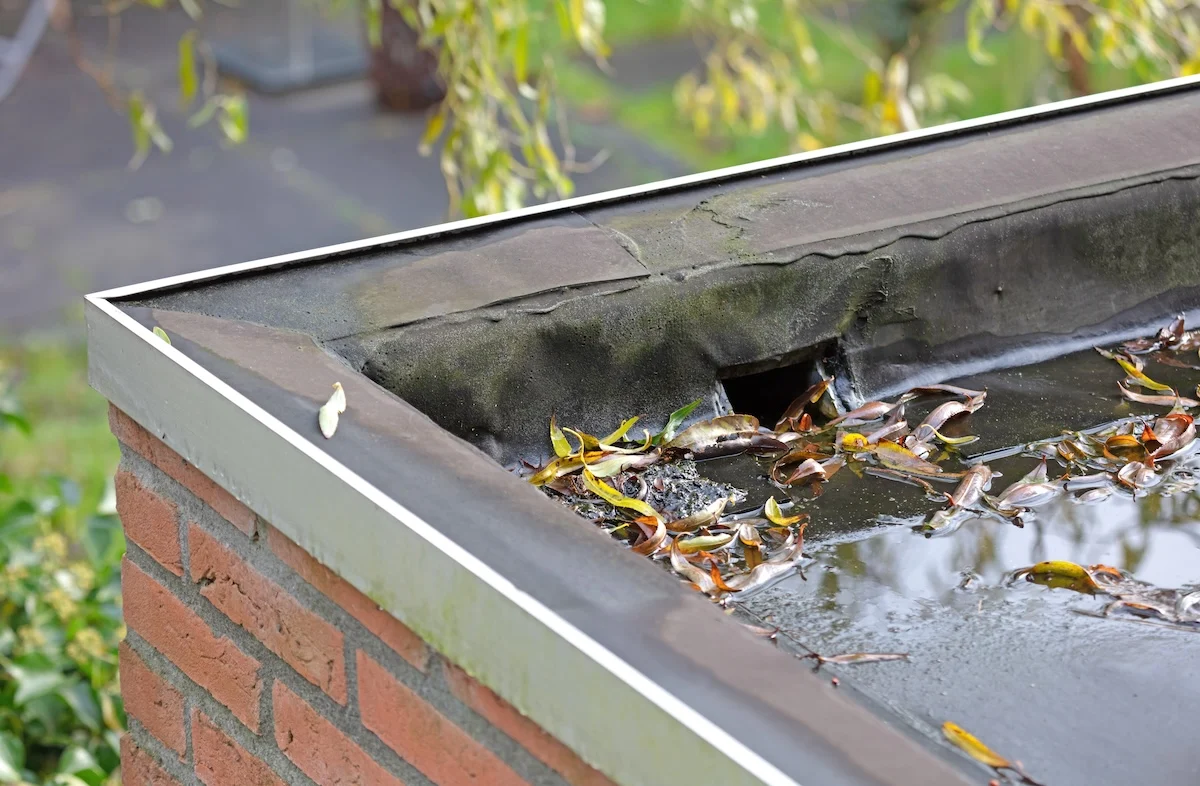
Commercial flat roof drains are the most mechanically simple component on the roof and among the most consequential when they fail. San Antonio's summer storm season delivers heavy, fast-moving rainfall - the NWS San Antonio station records multiple events per year with rainfall rates exceeding two inches per hour. A blocked drain during one of these events accumulates water on the roof at a rate that exceeds the structural design load of most commercial decks within 20 to 30 minutes. Drain maintenance is not optional.
Drain deterioration is also a primary leak source on San Antonio's older commercial stock. Buildings from the 1980s and 1990s along Military Drive, Ingram Road, and the older retail corridors on the South Side carry cast iron drain bowls that have been through multiple reroof cycles and multiple clamp-ring replacements. The bowl-to-deck connection on these old drains is often compromised - water passes between the bowl flange and the deck rather than through the drain itself, and no membrane patch in the immediate drain area fixes a bowl-flange leak.
We clean drains as part of annual maintenance programs and as emergency response after storm events. We repair deteriorated drain bowls, clamp rings, and sump pans. We replace drain bodies when repair is not viable. We address ponding conditions by correcting drain height relative to the membrane surface and by specifying tapered insulation packages that redirect drainage to existing or relocated drains.
Drain Cleaning - What It Covers
Surface strainer and dome: Every roof drain has a strainer or dome over the inlet to keep debris from entering the drain pipe. San Antonio's live oak trees - which are evergreen but shed leaves and pollen in spring - produce heavy organic debris loads on commercial roofs in March and April. Debris accumulates on the strainer and reduces flow capacity. We remove and clean the strainer at every maintenance visit and inspect the strainer for physical damage.
Bowl interior: The drain bowl below the strainer collects debris that passes through the strainer. We flush the bowl interior and inspect the clamp ring for tightness and seal condition. A loose clamp ring allows water to bypass the drain edge flashing and enter the deck - the clamp ring is what holds the membrane to the drain bowl.
Leader pipe: We verify positive flow in the leader pipe from each drain by flowing water from a hose through the bowl and confirming outlet flow at the building's downspout or interior leader connection. A partially blocked leader pipe reduces flow capacity without visible symptoms at the drain inlet - it only becomes apparent when a heavy rain event fills the drain bowl faster than the blocked pipe can drain it.
Emergency drain and overflow: Many San Antonio commercial buildings have overflow scuppers or emergency drains at a height above the primary drain to prevent catastrophic structural loading. We inspect emergency drain status at every maintenance visit and confirm they are not blocked or painted over - a surprising number of building owners and painting contractors seal emergency drains inadvertently during exterior maintenance work.
Drain Repair and Replacement
Clamp ring replacement: The most common drain repair. The clamp ring compresses the membrane against the drain bowl flange to create a watertight seal. Clamp rings corrode or deform over time and lose their compression. Replacement requires removing the membrane within 12 inches of the drain, replacing the clamp ring, and re-flashing the drain area with compatible membrane material.
Drain bowl replacement: When the drain bowl itself is deteriorated - cracked, corroded through, or with a damaged flange - bowl replacement is the required repair. We remove the membrane in the drain area, disconnect the leader pipe, and install a new bowl sized to match the leader pipe diameter. New bowl installation requires re-flashing the drain area and verifying positive connection to the leader pipe.
Sump pan installation: On roofs where ponding has developed around a drain because the drain inlet is above the membrane surface level - a common condition on roofs that have been recovered multiple times without resetting the drain height - a sump pan installation lowers the effective inlet height. The sump pan is a shallow sheet metal pan installed in the membrane at the drain location to create a low point that drains to the existing inlet. This is a cost-effective alternative to full drain relocation when the leader pipe cannot be moved.
Scupper repair: Overflow scuppers through parapet walls require a metal liner through the wall opening and a compatible flashing to the roof membrane. Deteriorated scupper liners allow water to contact the masonry around the opening. We replace scupper liners with primed galvanized or aluminum metal and re-flash the liner to the base membrane.
Ponding Correction
San Antonio commercial roofs develop ponding conditions for three main reasons: original construction with insufficient drainage slope (minimum 1/4 inch per foot is required but not always achieved); deck deflection from structural loading or karst-related settlement; and drain height elevation after multiple recover cycles without resetting the drain.
Ponding correction approach: The right correction depends on the ponding cause. Insufficient original slope is corrected with tapered insulation - a system of polyiso panels with a factory taper that provides positive slope to existing drain locations. Deck deflection requires structural assessment before roofing correction. Elevated drain inlets are corrected with sump pans or drain lowering when the leader pipe allows.
Documentation for insurance: Ponding water that produces structural overload or interior damage is a covered event under most commercial property policies when the drainage system can be shown to have failed - blocked drains, deteriorated drain bowls, or failed overflow scuppers. We document the drainage condition and the storm event data in a format that supports the insurance claim. We have produced this documentation for buildings near the Leon Creek Greenway and in the lower-elevation portions of the IH-35 South corridor that experience drainage stress during high-volume rain events.
Frequently asked questions
How often should commercial roof drains be cleaned in San Antonio?
Minimum twice per year for most commercial buildings - once in early spring after San Antonio's live oak pollen and leaf shed season (March through May), and once in the fall before the winter rain season. Buildings with trees overhanging or adjacent to the roof, buildings with rooftop HVAC equipment that sheds debris, and buildings in areas with significant airborne particulate (near construction zones or the IH-35 South industrial corridor) may need quarterly cleaning. We include drain cleaning in our annual maintenance programs.
Water was pooling on the roof during the last storm - is that a structural concern?
It depends on the depth and duration of ponding and the roof structure. Most commercial steel and concrete deck systems are designed for a maximum water load of approximately 5.2 pounds per square foot - equivalent to about one inch of standing water. Water at two to three inches depth for more than a few hours represents a structural loading condition that approaches or exceeds design limits on many older commercial buildings. We advise any building owner with significant storm ponding to consult a structural engineer for a deck load evaluation in addition to addressing the drainage deficiency.
My building has been re-roofed twice and the drains are now above the membrane surface. What are the options?
Three options depending on the building: sump pan installation, which is the lowest-cost option and works when the vertical drain space in the building allows minor leader pipe adjustment; drain extension with a compatible bowl adapter, which lowers the inlet height without touching the leader pipe; or full drain replacement with a new drain body at the correct elevation, which is the most reliable solution but requires opening the roof and connecting to the existing leader pipe. We assess the accessible drain geometry during inspection and recommend the option appropriate to your building's configuration.
Drain problems on your San Antonio commercial roof? We find the issue and fix it.
From blocked strainers to deteriorated bowls to full ponding correction - we handle commercial drain maintenance and repair across Bexar County.
Request a Roof Scope